FL Studio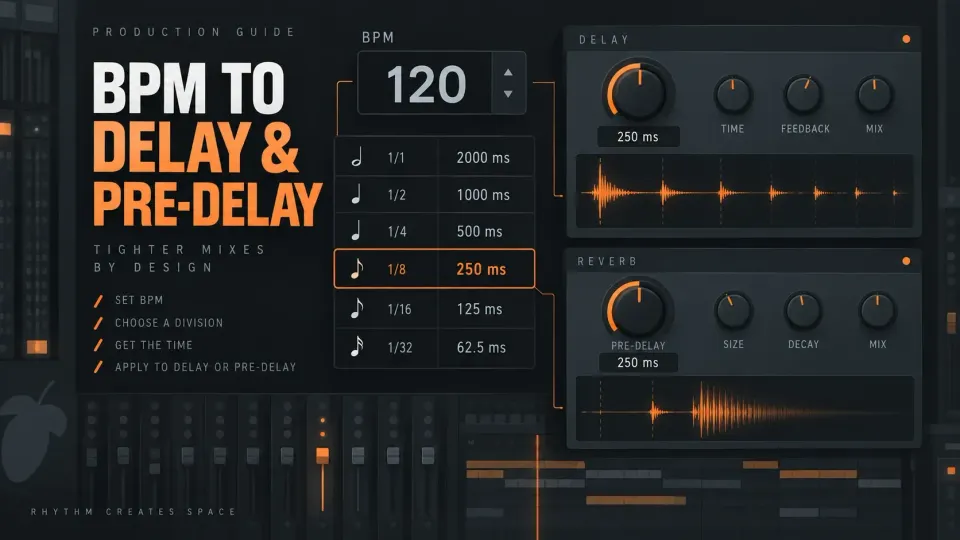
If you are mixing in FL Studio, a generic BPM-to-milliseconds table is only half the job. You still need to decide whether the number belongs in Fruity Delay 3 as a musical repeat, in Fruity Reeverb 2 as a pre-delay reference, or on a send where the effect should stay behind the dry signal.
FL Studio delay and reverb calculator
Enter the project tempo. The values below are timing references in milliseconds, rounded to two decimals.
FL Studio delay and reverb calculator
Enter the project tempo. The values below are timing references in milliseconds, rounded to two decimals.
Use the musical divisions for tempo-synced delay repeats. Treat the pre-delay value as a starting reference for separating the dry sound from the first reverb reflection.
Use the musical divisions for tempo-synced delay repeats. Treat the pre-delay value as a starting reference for separating the dry sound from the first reverb reflection.
How the timing calculation works
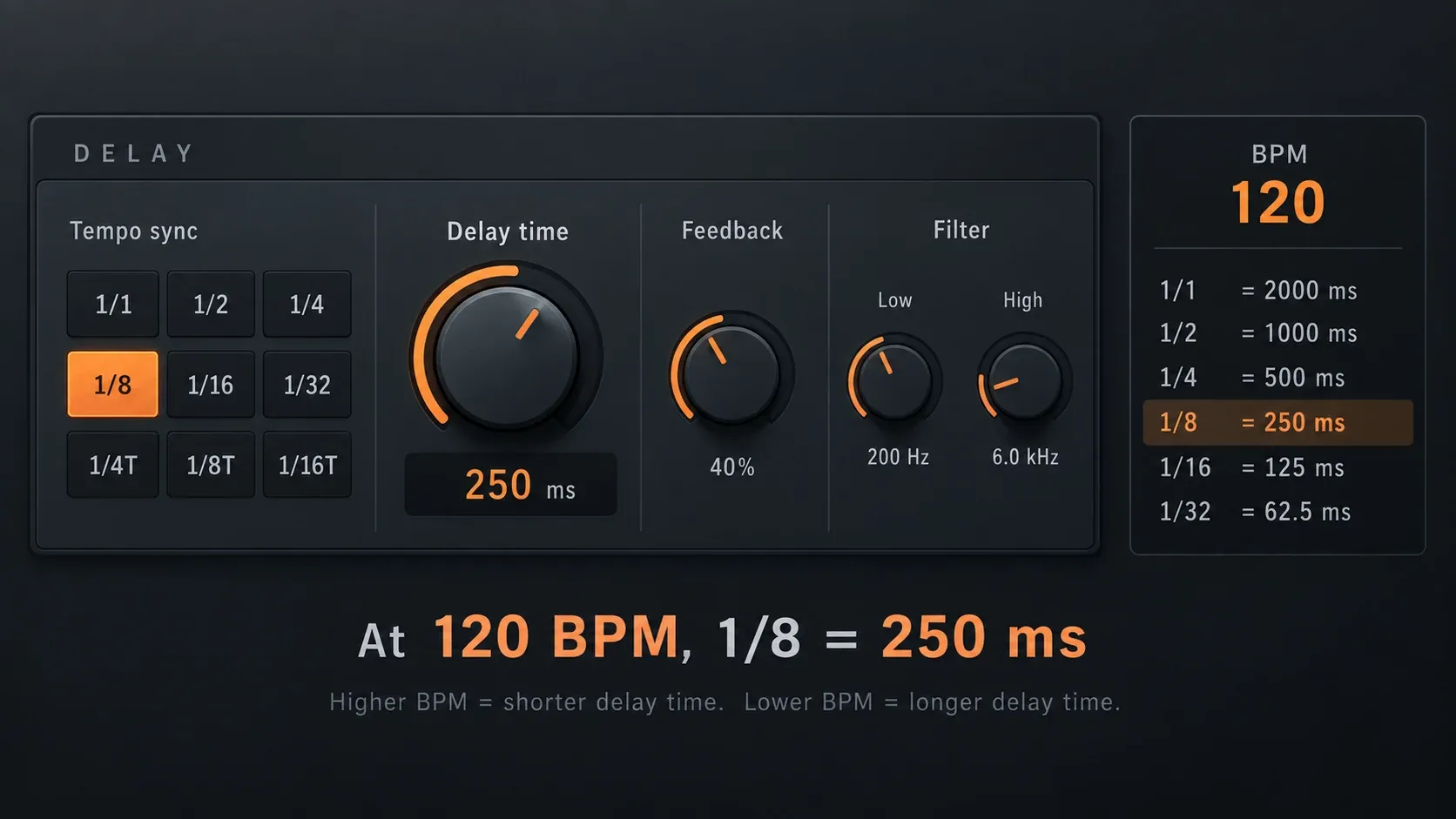
The base relationship is simple: one quarter note lasts 60,000 ÷ BPM milliseconds. At 120 BPM, a quarter note is 500 ms. A half note is twice that length, an eighth is half, and a sixteenth is one quarter.
Dotted values multiply the related division by 1.5. Triplets use two thirds of the related straight division. These are timing calculations, so they give you a repeat or spacing reference; they do not decide whether the effect fits a particular vocal, drum hit or chord.
Use the calculator as a translator. It turns the tempo already in your FL Studio project into a value you can enter or compare inside an effect. It does not replace the mix decision about feedback, wet level, filtering or the amount of space the arrangement can carry.
Delay divisions for Fruity Delay 3
Fruity Delay 3 can follow the project tempo and use musical values. The Image-Line manual also documents a millisecond range when tempo synchronisation is off. That gives you two useful ways to work: keep the repeat locked to the song while arranging, or enter a fixed time when the repeat should stay unchanged as the project tempo moves.
| Division | What it usually changes | When to reach for it |
|---|---|---|
| Quarter | A clear repeat after each beat | Echoes that should be easy to count in a sparse part |
| Eighth | Faster repeats between beats | Short vocal, synth or percussion movement |
| Dotted eighth | A syncopated 3/16 feel | Rhythmic repeats that should weave around straight eighths |
| Triplet eighth | A rolling triplet subdivision | Triplet phrasing or a deliberate swing-like repeat |
| Sixteenth | Very tight repeats | Texture and density, with feedback kept under control |
Start with the division that matches the phrase's grid, then adjust the audible result with feedback, mix and filtering. If the repeat should land in the same musical place after a tempo change, keep tempo sync on. If you are matching a one-off timing reference or want the delay to remain fixed, use the millisecond mode described by Image-Line.
Dotted and triplet values are useful when straight repeats feel obvious
A straight eighth repeats every half of a quarter note. A dotted eighth lasts three sixteenths, so it shifts the repeat against a straight eighth grid. A triplet eighth lasts two thirds of an eighth-note pair. The difference is small in the calculator and obvious in a repeated phrase: the echoes stop marching on the same subdivisions as the source.
Use dotted timing when you want the repeat to cross the expected midpoint of the beat. Use triplets when the source phrase already suggests a three-part subdivision. If the result feels late or crowded, shorten the division before reaching for more damping or less feedback; the problem may be the rhythm rather than the effect level.
Reverb pre-delay is the gap before the room arrives
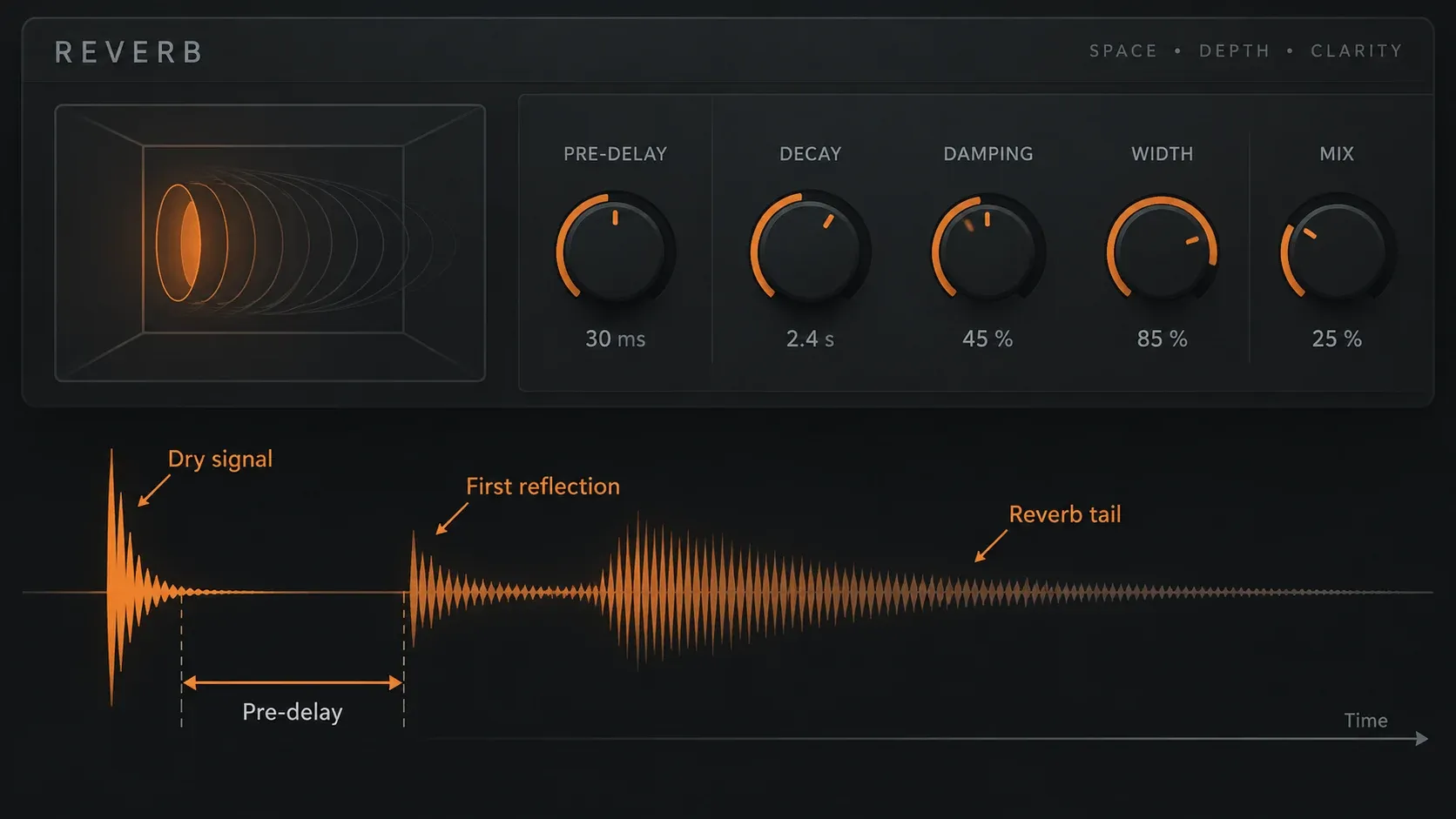
Delay repeats and reverb pre-delay answer different questions. A musical delay creates a recognisable copy of the source after a chosen interval. Reverb pre-delay keeps the direct sound separate from the first reflection, so the attack can remain readable before the reverb tail fills the space.
Fruity Reeverb 2 describes Delay/Predelay as the distance between the direct signal and the first reflection, and its manual includes tempo-based pre-delay. The calculator's pre-delay reference helps you compare that gap with the project rhythm. It is a starting point, not a universal setting: a fast vocal phrase, a long pad and a sharp snare can need very different separation.
For the control names and documented behavior, use the Fruity Delay 3 manual and Fruity Reeverb 2 manual. The BPM relationship follows the standard BPM-to-milliseconds conversion; the mix decision still belongs to the phrase in front of you.
Put the number in the right FL Studio workflow
For a controlled mix, place delay and reverb on a Mixer send when the effect should sit behind the original signal and serve several channels. The source channel stays dry or lightly processed; the send carries the time-based effect, where you can filter the return and automate its level independently.
An insert can make sense when the effect is part of one sound's identity and should travel with that channel. Whichever route you choose, check the dry/wet balance and avoid treating the calculated time as the whole mix setting. The timing only answers when the repeat or first reflection begins.
Use the FL Studio reverb and delay sends guide for the routing decision, and return here when you need a tempo-derived number. The FL Studio tools hub collects the platform-specific utilities in one place.
When the calculated value does not sound right
The repeat is in time but still feels wrong
Check the phrase's subdivision before changing the delay level. A quarter-note repeat may be mathematically correct and still cover the next vocal consonant. Try an eighth, dotted eighth or triplet reference, then reduce feedback until the last repeat leaves room for the next phrase.
The reverb makes the attack disappear
Lower the pre-delay reference or reduce the return level. If the dry signal is already soft, a long gap can make the room feel detached instead of clear. On a send, filter the return and keep the source channel readable.
The tool rejects the BPM
The page accepts whole-number or decimal BPM values from 20 to 300. Enter the tempo shown in the FL Studio transport and recalculate. A blank, non-numeric value or number outside that range is rejected so the page does not return a misleading timing.
The timing changes when the project tempo changes
That is expected for tempo-synced musical delay. Keep sync enabled when the repeat should follow the project. Switch to a fixed millisecond value only when the repeat should remain constant while the tempo moves.
Choose the number, then make the mix decision
Use the calculator to get a clean timing reference, not a preset answer. Pick the division that matches the phrase, decide whether the effect belongs on an insert or send, and then shape feedback, filtering, pre-delay and wet level around the actual arrangement. That keeps the tool useful without letting one number dictate the whole mix.