FL Studio
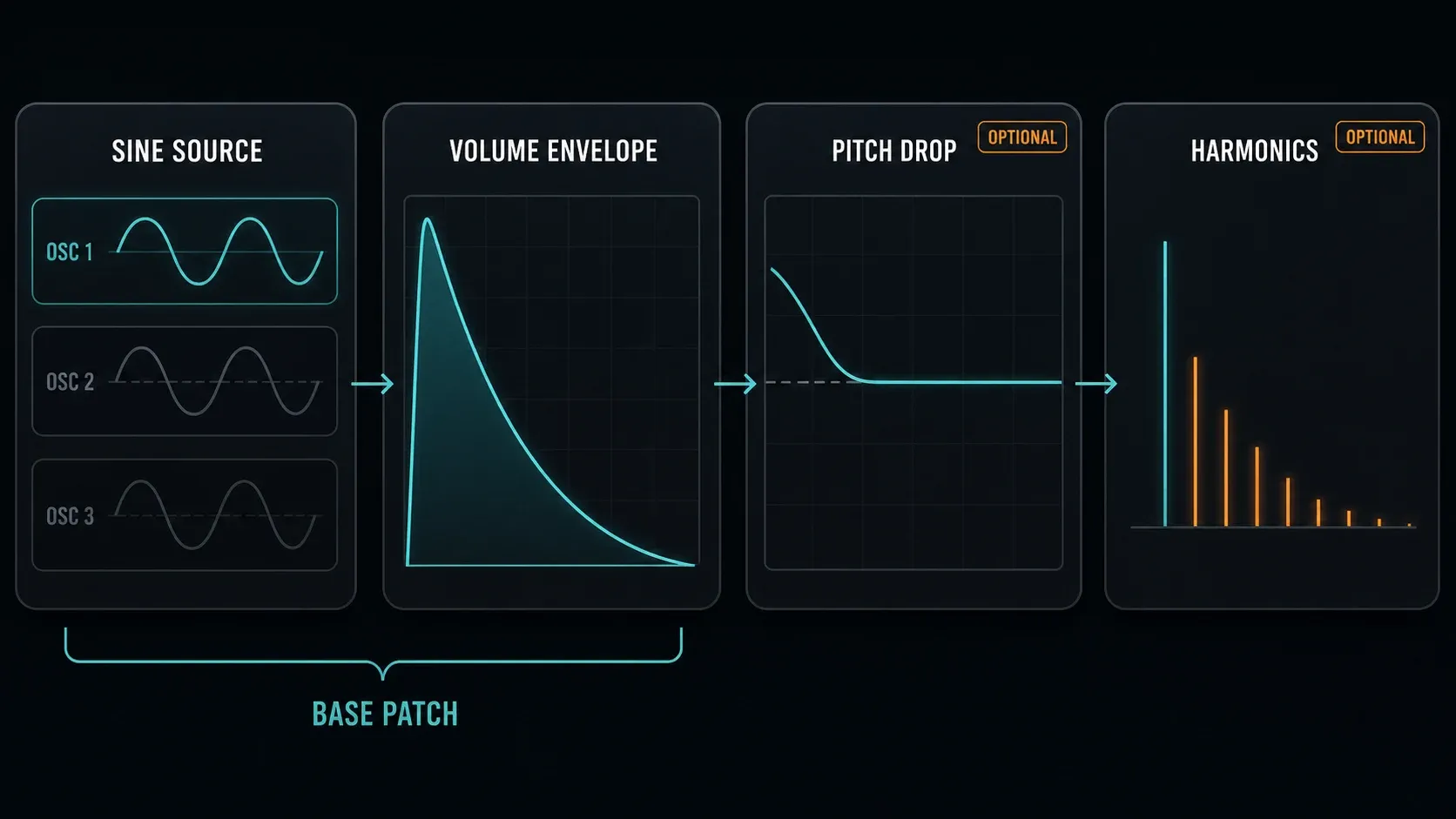
To make an 808 in FL Studio with 3xOSC, start with OSC 1 set to sine and turn OSC 2 and OSC 3 Mix Level down to zero. Enable the Channel Volume envelope and shape the tail. A short Pitch-envelope drop can add a percussive front edge; a little harmonic content can help the bass register on smaller speakers. Neither is compulsory. Finish by saving the full Channel state and checking that it reloads with its envelopes.
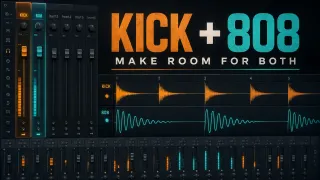
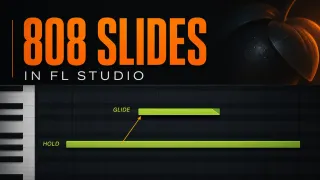
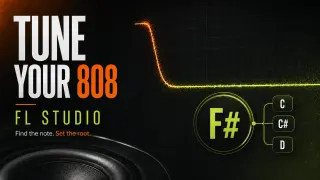
This guide builds a playable synth bass in desktop FL Studio, not an emulation of every part of a Roland TR-808 circuit. You do not need a downloaded 808 sample for this patch. If you already have a sample and only need to identify its note, go to the 808 tuning guide instead. The interface illustrations and envelope sketches below explain the controls; they are not captured sessions or measured audio.
Build the 3xOSC 808 in nine stages
- Load the instrument. Add 3xOSC to a new Channel and confirm that its three oscillator rows are visible.
- Isolate a sine. Select the sine shape on OSC 1; set OSC 2 and OSC 3 Mix Level to zero.
- Check pitch. Keep fine tuning neutral, choose the bass register with Piano Roll notes and use coarse tuning only for intentional transposition.
- Check the start. Compare low Phase Rand and neutral stereo offsets; use a short Volume-envelope attack if starts click.
- Shape the tail. Use zero Sustain for a decaying hit or nonzero Sustain for a held bass. Test note length and Release in both cases.
- Try a pitch drop. Enable a short downward Pitch envelope only if it improves the front edge; check that the body returns to the intended note.
- Add presence if needed. Compare a quiet triangle layer or gentle WaveShaper processing, adjusting output so louder does not automatically win.
- Play a phrase. Test several notes, note endings and playback systems. Judge the bass with the drums, not just in solo.
- Save and reload. Use Save channel state as, keep Mixer processing separately, and confirm the instrument and envelopes reload correctly.
Start with the sine and Volume envelope. Save a plain version before adding grit or glide: it gives you a useful way back when a later change makes the patch worse.
Give each part of the patch one job
The oscillator supplies a pitched tone. The Volume envelope shapes its loudness over time. A Pitch envelope bends the beginning of the note; a harmonic layer or distortion changes its tone. You can make a restrained sub bass or a more percussive, gritty 808 by changing those decisions independently.
These are sound-design choices, not a complete mix chain. Write the phrase after the source works, using the first-beat workflow if you need help assembling drums and bass. The Beatmaking library places source design alongside rhythm, tuning and slides.
Load 3xOSC, then check the Channel
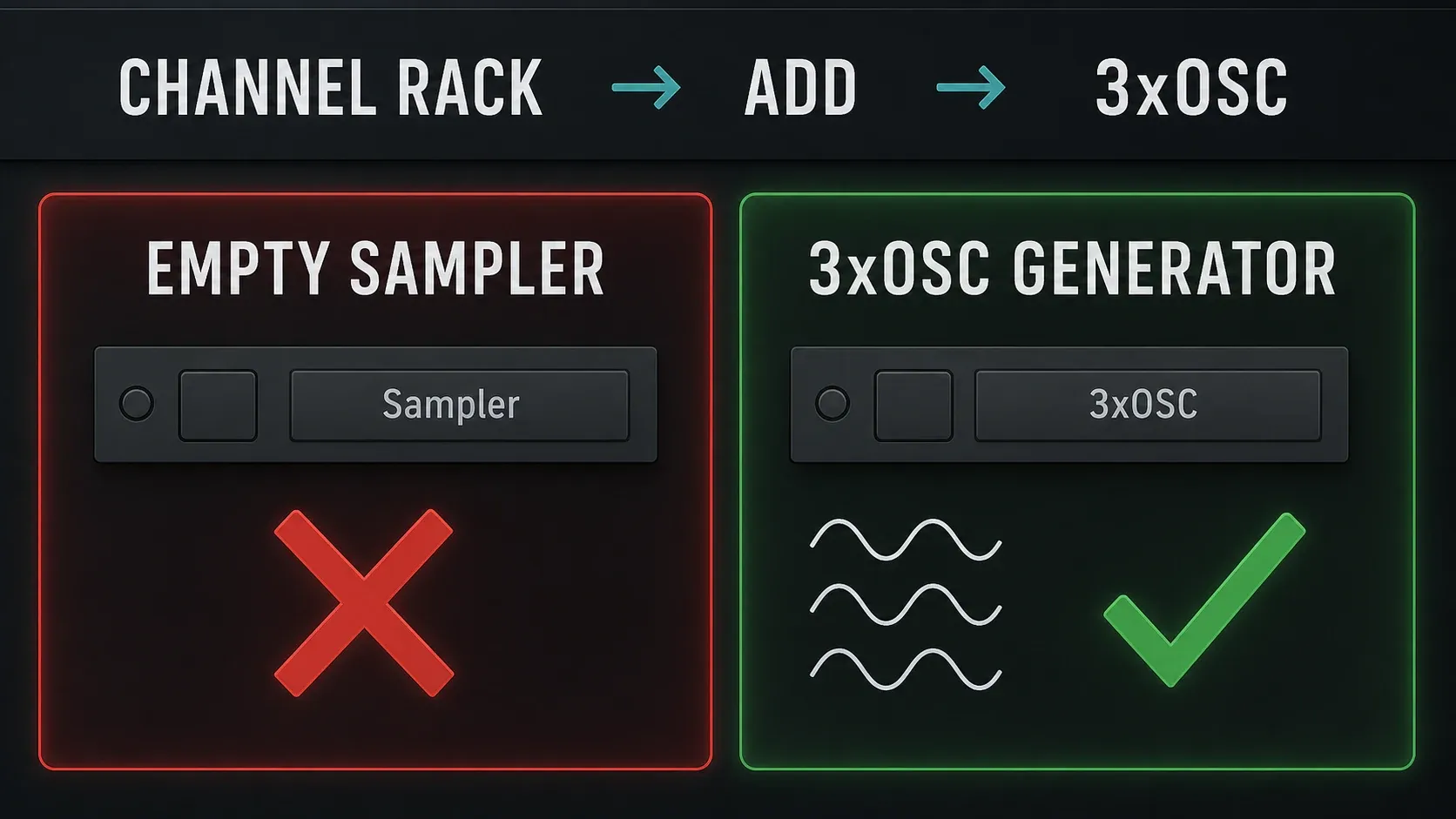
Add the 3xOSC generator from the Channel Rack's instrument list. Open its Channel button and check for three oscillator rows. A Channel still showing an empty Sampler is not the synth setup used here. The Channel Rack guide explains adding instruments if the list is unfamiliar.
Do not diagnose a preset by its filename alone. Instrument presets, Channel states and audio samples are different things; loading one into the wrong place can give you an unexpected result. For a from-scratch patch, loading the generator first removes that uncertainty. This is not a rule that a full Channel preset can never replace another Channel.
Image-Line's 3x Osc manual explains how the generator works with the integrated Sampler settings. That is why you shape its envelopes outside the small oscillator panel. Use the broader 3xOSC instrument guide for other waveforms and modulation; this tutorial stays with the bass patch.
Start with one sine and intentional tuning
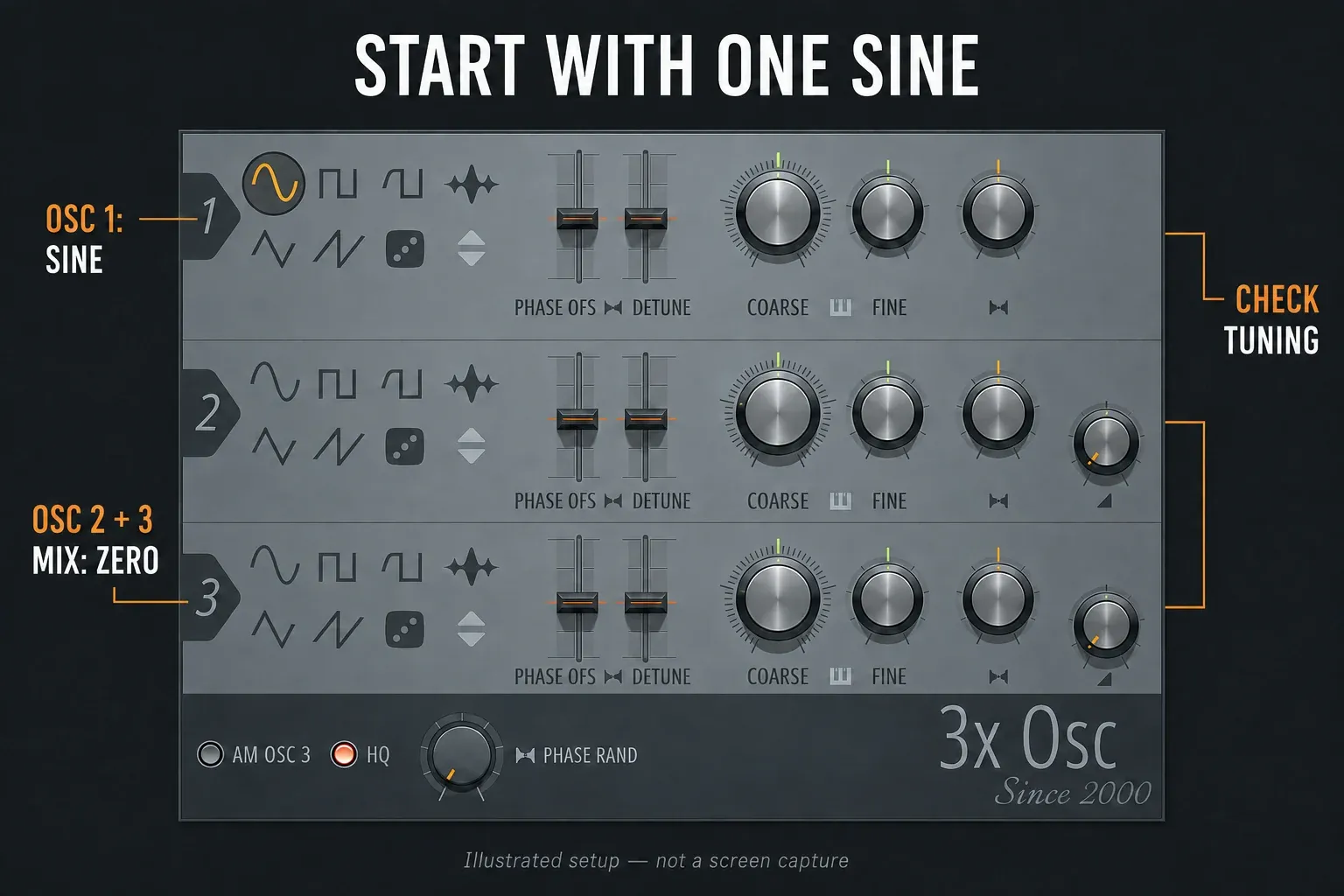
Select OSC 1's sine button. Turn OSC 2 and OSC 3 Mix Level fully down. OSC 1 has no separate Mix Level knob: those two controls determine how much of the other oscillators joins it. They change the proportions, rather than behaving like independent faders that leave the sine untouched.
Write a few low notes in the Piano Roll. Listen at a sensible level and choose a register your playback system can reproduce. If the sound seems absent, try a higher note before turning the volume up. An extremely low note can be difficult to hear without being silent.
Use coarse tuning for an intentional octave or semitone offset, not as a universal “better sub” setting. Keep fine tuning neutral initially, and check the actual pitch rather than copying a knob position from a different preset. Also check Channel pitch and root-note settings if the played and heard notes disagree. A clean starting preset helps avoid inherited offsets.
For this first comparison, keep pan centered, stereo Phase OFS and Detune neutral, and AM OSC 3 off. These controls have creative uses, but a simple starting point makes changes easier to hear. A pure sine is deliberately sparse; do not mistake that for a broken synth.
Remove an unwanted click without losing the attack
Repeat the same note at the same velocity. If starts vary, compare low or zero Phase Rand with the previous setting. Image-Line identifies phase offset as one possible source of clicks and recommends a short Volume-envelope attack. That does not mean every click is caused by phase randomness.
Open the Channel's detailed settings, choose the Envelope / Instrument section and select Volume. Enable its envelope using the orange LED. Compare an immediate start with a short Attack: lengthen it only until the unwanted edge is reduced. If the bass becomes slow or soft, back off and listen with the kick again.
A click at the end of a note needs a different check. Inspect note-off, Release and any cut or voice-stealing behavior before changing the start. Wave Candy's oscilloscope and metering modes can help you inspect the transition, but do not make a pretty waveform the goal.
Choose a decaying hit or a held bass
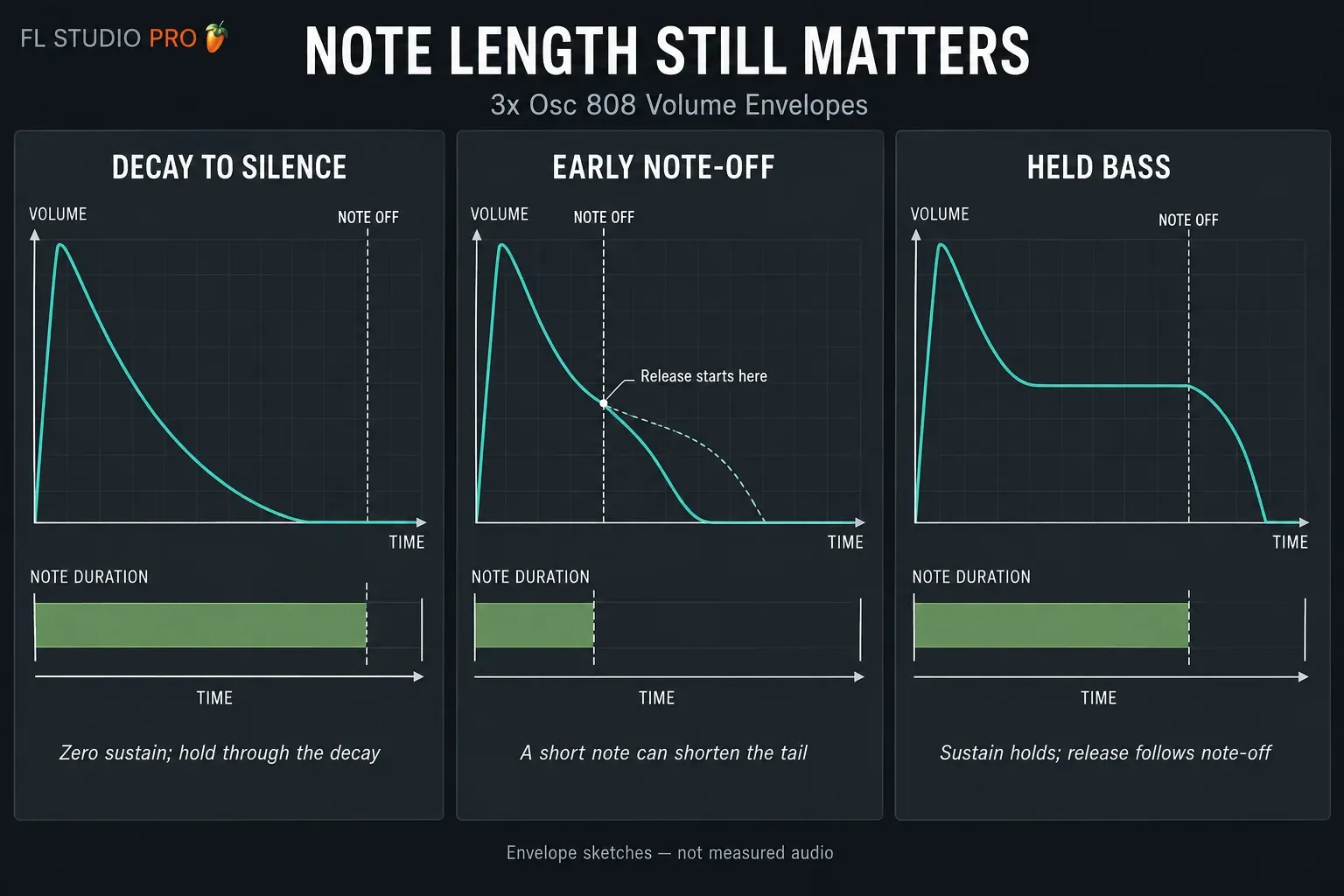
The Channel envelope controls separate timing from level: Attack, Hold, Decay and Release set lengths, while Sustain sets the level held after Decay. Confirm that the Volume envelope is on before editing it.
For a decaying hit: remove deliberate Delay, use a short clean Attack, keep Hold brief and set Sustain to zero. Adjust Decay until the tail fits the gap in the rhythm. Hold the Piano Roll note long enough to hear that decay finish.
For a held bass: keep some Sustain after Decay, then use the written note length to control the body. Release shapes the fade after the note ends. Shorten the note and listen again; then lengthen it. That small test tells you more than copying someone else's knob percentages.
Zero Sustain does not make this an unconditional one-shot. A note-off before Decay finishes can send the envelope into Release and change the tail. Test short notes in the decaying patch too. The ADSR stages explain the distinction between a decay toward Sustain and a release after the note is let go.
Add a short pitch drop, not an endlessly falling note
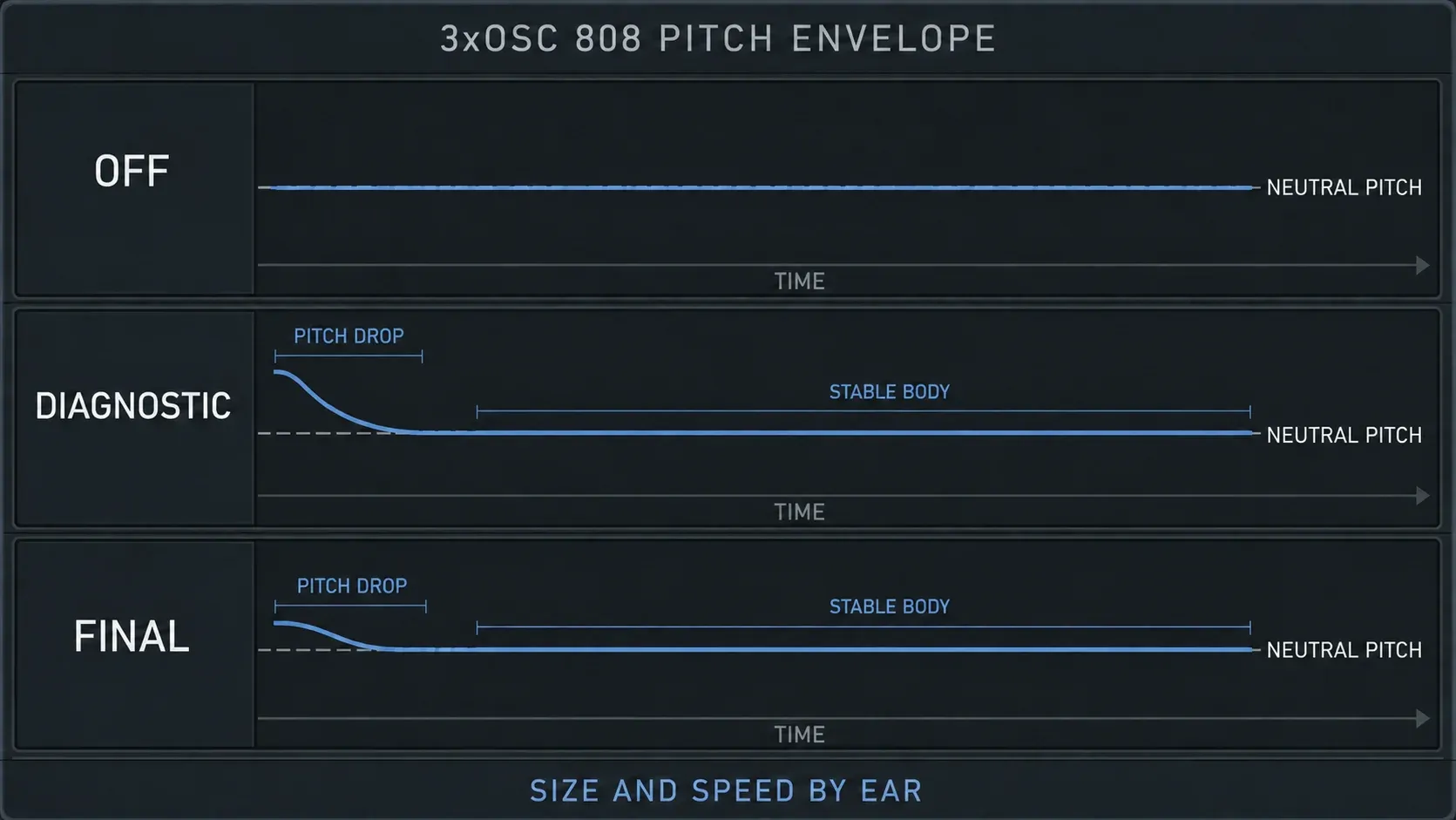
Select Pitch in the same Channel section and enable its envelope. Begin with no deliberate Delay, a very short Attack and Hold, a short Decay and a neutral final level. Apply positive envelope Amount so the beginning sits above the resting pitch and falls back toward it. Check the sound after the drop, not just the initial thump.
Compare three versions: no pitch envelope, an obvious drop that confirms the control works, and a smaller drop that fits the beat. The exaggerated version is a diagnostic, not a recommended final setting. If nothing changes, check the envelope LED and Amount; do not accidentally adjust the adjacent LFO instead.
There is no universal pitch-drop amount or time. Too much movement can make the source sound like a separate kick or a falling laser. Too little may be inaudible, which is fine if the plain sine already fits. A glide between notes is a different job, covered in the 808 slides and portamento guide.
Add harmonics when the bass needs more presence
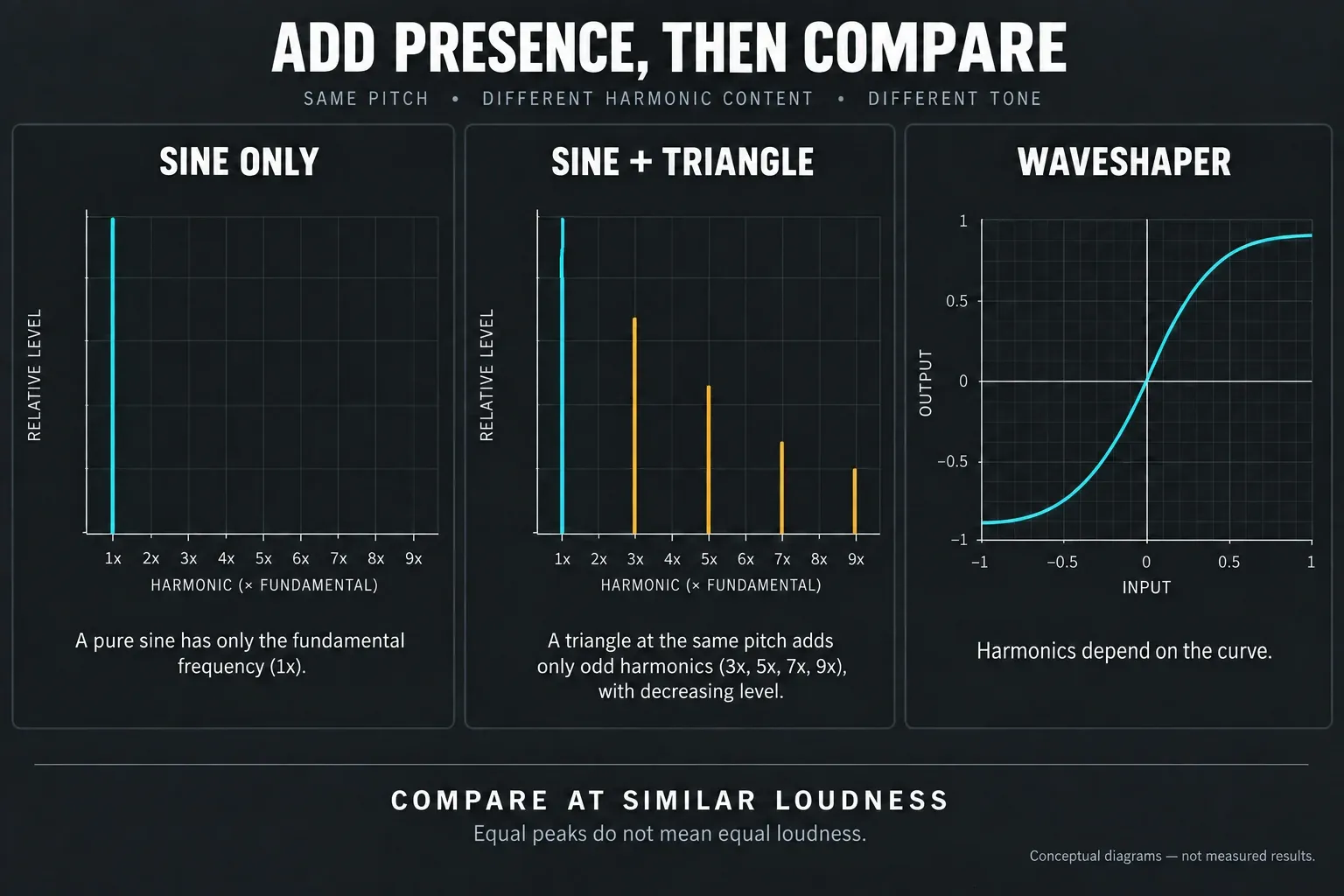
If the clean sine is hard to follow on small speakers, try OSC 2 as a quiet triangle. Start at the same pitch; an octave above is another sound-design choice, not a correction you always need. Keep OSC 3 out while judging the change.
A triangle contributes odd harmonics above its own fundamental. Blending it in also changes the oscillator mix ratio, so check the bottom end as well as the extra edge. Turn the result down if needed before comparing. A brighter patch can feel more present even when its meter peaks are similar.
Keep the layer only if it helps the musical line. A supporting sub beneath another bass does not necessarily need to announce itself through a phone speaker. That depends on the arrangement, not a universal requirement for every 808.
Try WaveShaper as an alternative, not a compulsory chain
Route the instrument to a dedicated Mixer track and add Fruity WaveShaper if you want to compare distortion with the oscillator layer. Its input-to-output curve changes the waveform; Pre drives the input, Mix blends processed and dry sound, and Post adjusts the output. A straight identity map does not become saturation merely because the plugin is loaded.
Start with a gentle nonlinear curve and compare a modest processed Mix. Adjust Post until bypass and processing sound close in loudness. Equal peak readings alone do not guarantee that match. Switch the triangle layer off for this test so you can hear what WaveShaper contributes on its own.
Oversample can help reduce aliasing artifacts. Center removes DC offset from the output, useful when asymmetric shaping creates an offset. Neither guarantees a better tone. Keep distortion only if the bass remains useful both on small playback and on a system that reproduces the low end.
If a particular resonance or excessive top end remains, use a small, audible correction with Parametric EQ 2. Its filter controls allow different shapes; there is no mandatory high-pass or low-pass frequency for this patch.
Test the whole phrase before saving
Play a low, middle and higher note from the range you intend to use. Check whether the pitch settles, the tail leaves room and the upper notes become harsh. Keep velocity consistent for a controlled comparison, then test the expression you actually want.
Put a short phrase against your kick-and-bass rhythm. Listen on full-range playback and in mono; use a phone to judge whether the intended harmonic line survives, not whether it reproduces the deepest fundamental. These are checks for you to perform, not a claim that this tutorial's example was measured on those devices.
Once the source is useful, deal with kick balance, masking and dynamics in the 808 mixing workflow. The Mixing library takes over from sound design. Avoid baking aggressive kick-specific cuts into a preset you want to reuse in different songs.
Add glide after ordinary notes work
Save the stable version before experimenting with note transitions. Image-Line's Channel polyphony settings distinguish Mono, Porta and the SLIDE time control. Native slide notes are another approach. Choose one method deliberately rather than turning on every slide-related option.
Overlapping notes can interact with Mono behavior, and long Release can leave an audible overlap. Check two notes first, then the complete phrase. These transitions do not replace the brief Pitch-envelope movement at the beginning of a note.
Save the instrument and its Mixer processing separately
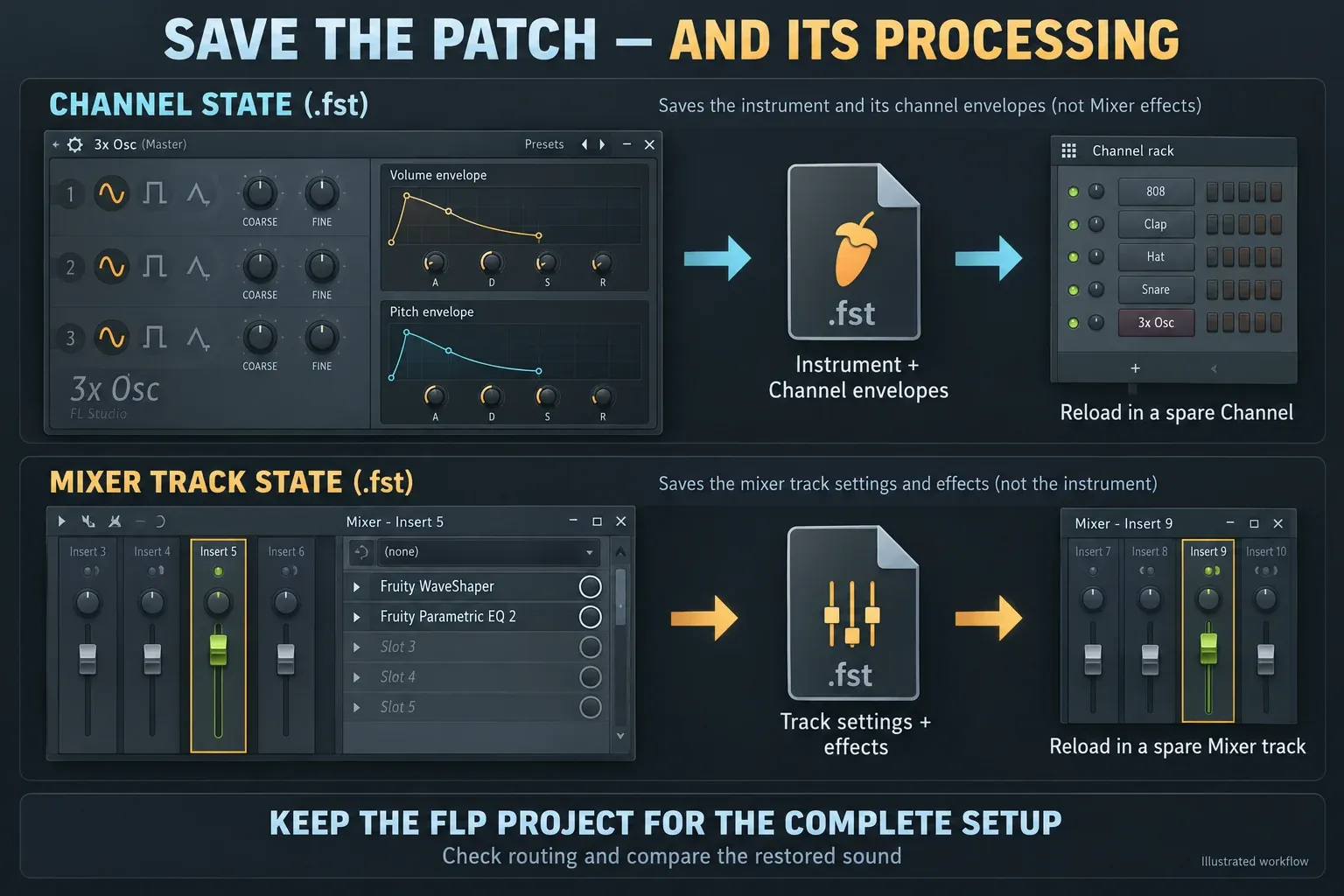
Open the Channel Settings menu and choose Save channel state as. This creates an FST preset. Use a descriptive name such as 808 - clean decay; save a separate version for a held or gritty patch instead of overwriting the clean one.
A generator-only preset is not a safe substitute for the full Channel state here: 3xOSC relies on the surrounding Channel envelopes. Reload your saved state into a spare Channel, away from anything you need to keep, and check oscillator shapes, Mix Levels, Volume and Pitch envelopes, tuning and intentional glide settings. Check its Mixer assignment too.
Effects hosted on a Mixer track are separate from this Channel preset. If WaveShaper or EQ is part of the sound you want to reuse, save that track through its File menu's Save mixer track state command as well. Load it only into a spare or deliberately chosen track: restoring a state changes that track's settings and effects. Keep the FLP project for the complete arrangement and routing context.
Want an audio 808 to reuse in a Sampler instead? Keep the editable source first, then follow the resampling workflow. Check the rendered start, tail and pitch before treating it as a finished sample.
Find the stage that is causing the problem
- No sound: check the loaded generator, Channel mute/volume, Mixer routing and output. Try a higher note at a safe level and inspect the Volume envelope.
- Envelope has no effect: verify the selected target and its orange LED. Check envelope Amount where available, not the neighboring LFO Amount.
- Click at the start: compare phase settings and a short Volume attack. Check the unprocessed source before blaming the synth.
- Click at the end: inspect the note ending and Release, including cuts or voice changes that interrupt the sound.
- Tail is too short: hold the note longer and check Release as well as Decay. Zero Sustain alone does not make note length irrelevant.
- Pitch keeps falling: reduce the Pitch envelope's duration or amount and check its final level against the unmodulated note.
- Preset sounds different: verify the full Channel state, Mixer assignment and separately saved effects, rather than only the generator panel.
- Good solo, muddy with drums: compare note lengths and kick timing, then move to the dedicated mix diagnosis.
Before calling the patch finished
- OSC 1 sine works alone, with OSC 2 and OSC 3 Mix at zero.
- Pitch and stereo settings are intentional, not inherited surprises.
- Both note starts and note endings have been checked.
- The Volume envelope behaves correctly with long and short notes.
- Any pitch drop settles at the intended body note.
- Optional harmonics improve the phrase at comparable loudness.
- Several pitches and the intended playback conditions have been checked.
- The full Channel state reloads correctly; external Mixer effects and the project are saved separately where needed.
FL Studio 3xOSC 808 FAQ
Which waveform should I use for a 3xOSC 808?
Start with OSC 1 set to sine and OSC 2 and OSC 3 Mix Level at zero. Add a quiet triangle or distortion only if the sound needs more upper harmonics.
Do I need an 808 sample to make this patch?
No. This patch uses 3xOSC's oscillator as its source. You can render it to audio later, but keep the editable Channel state first.
What Volume envelope should an 808 use?
Use zero Sustain for a decaying hit, or nonzero Sustain for a held bass. Test note length and Release in both cases: an early note-off can change the tail even with zero Sustain.
Does a 3xOSC 808 need a Pitch envelope?
No. Add a brief downward pitch movement only when a percussive front edge helps, and check that the body returns to the intended note.
Why does my 3xOSC 808 click?
Check where the click occurs. A start click may respond to phase settings and a short Volume attack; an end click calls for checking note-off, Release and any cut or voice change. Compare the unprocessed source too.
How do I make a 3xOSC 808 audible on a phone?
Try a quiet triangle layer or gentle WaveShaper processing at comparable loudness. Keep the change only if it improves the intended bass line without spoiling full-range playback; a phone may not reproduce the deepest fundamental.
Can 3xOSC make sliding 808s?
Yes. Use a deliberate native slide or Channel Mono/Porta setup after ordinary notes work. A transition between notes is different from the Pitch envelope at the start.
Why did my saved 3xOSC preset lose its envelopes or effects?
Use Save channel state as for the instrument and its Channel envelopes, not just a generator-only preset. Mixer effects are separate: save the Mixer track state or keep the project, and verify routing when reloading.