FL Studio
To mix an 808 in FL Studio, give it a separate Mixer insert, set its level in the full beat and decide what the kick should contribute. Fix unwanted note overlap before reaching for EQ. Then try a small corrective cut, gentle saturation or kick-triggered ducking only if you can name the problem each move solves.
A clear 808 is not necessarily the loudest sound in the project. You should be able to follow the bass phrase without losing the kick rhythm or burying the melody. This guide uses the desktop FL Studio Mixer and its native effects; the illustrations explain the decisions, not measured results from an audio session.
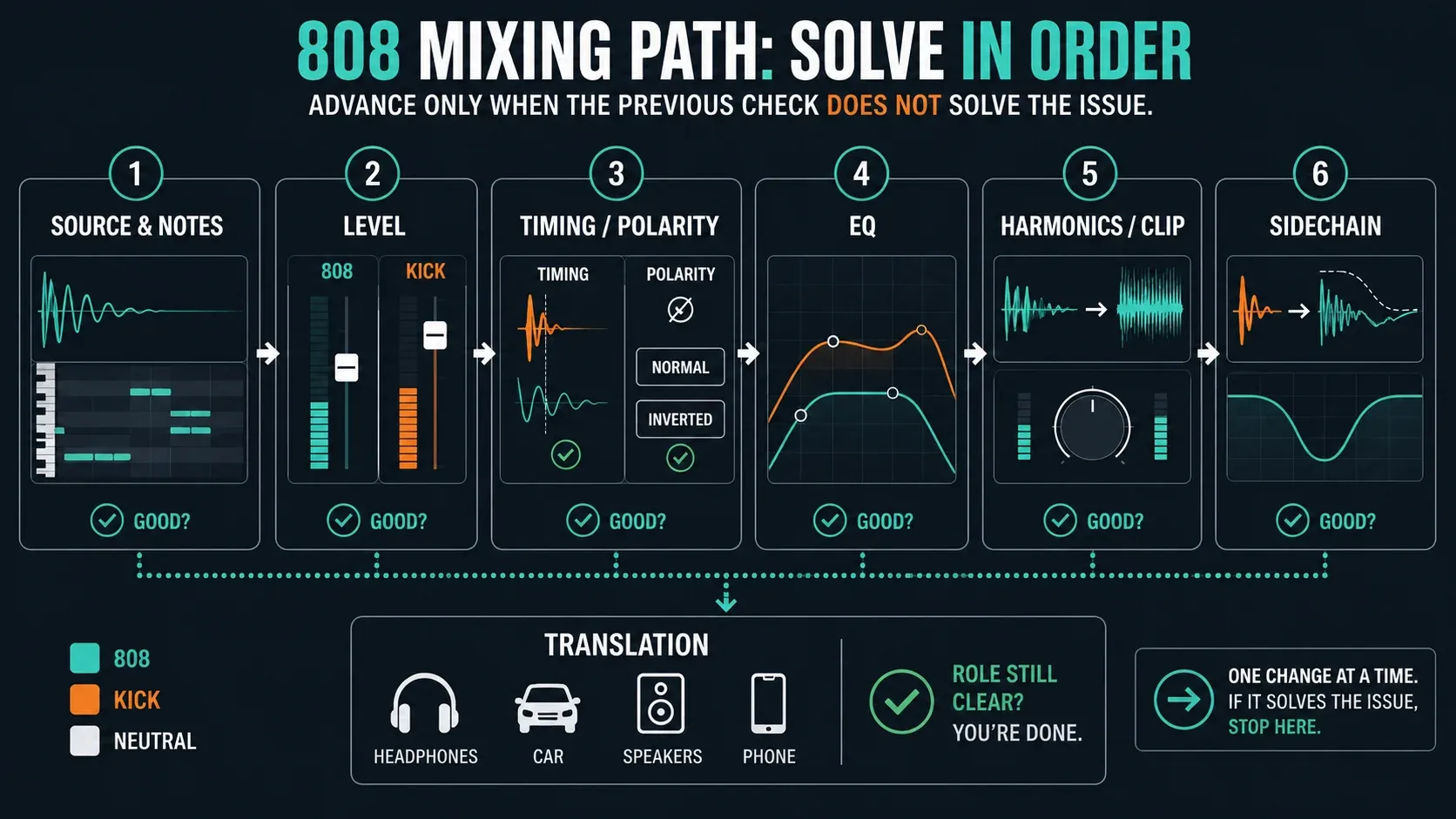
Mix an 808 in ten listening decisions
- Check the source. Confirm the 808 is in tune and its note endings fit the phrase.
- Separate the routes. Put the kick and 808 on different named Mixer inserts.
- Balance in context. Set the bass level with the busiest representative section playing.
- Choose the roles. Decide which sound supplies the attack and which supplies the sustained weight.
- Listen to the overlap. Shorten an unwanted tail or change a collision only if the groove survives.
- Compare polarity. Test the normal and inverted 808 with the kick across several notes, not just one hit.
- Make a useful EQ move. Locate unwanted energy, try a small cut and compare with bypass.
- Test harmonics. Add gentle saturation only if it improves audibility at a matched playback level.
- Duck when needed. Use the kick to trigger 808 gain reduction only where overlap still obscures the attack.
- Check translation. Compare normal playback, a small speaker, mono and a level-matched reference.
Stop adding processors when the relationship works. These are listening decisions, not ten mandatory effects. The Beatmaking & Drums hub puts this lesson after building and tuning the bass part; the Mixing hub connects it to routing, sidechain and whole-song balance.
Fix the source and phrase first
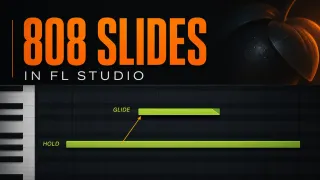
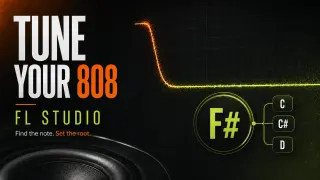
EQ cannot turn a wrong note into the right one. Use the 808 tuning workflow if the bass disagrees with your melody. If the pitch is right until a bend, check the 808 slide and return-glide settings before mixing around the mistake.
Mute the kick briefly. Do two bass notes blur together? Does a tail continue through a gap you intended to leave empty? For a sample playing in Sampler, shortening a Piano roll note is not a reliable fix unless the playback envelope responds as intended. Enable and shape the Volume envelope, then listen to its release. Image-Line documents these Sampler envelope controls; other instruments have their own envelope behavior. Preserve wanted slides rather than cutting every overlap.
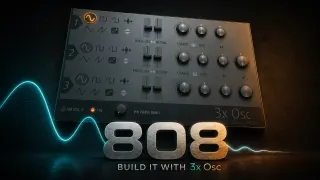
Now hear the kick by itself. If both sources have long bass tails, audition a shorter kick before building a complicated chain. If the 808 already contains a punchy attack, try omitting the extra kick on some accents. For a more controllable source, build an 808 with 3xOSC. To change where the parts collide, work on the kick and bass rhythm. Neither problem needs to become an EQ problem.
Route kick and 808 separately
Save a new project version first. Assign the kick Channel to one Mixer insert and the 808 Channel to another using their Mixer Track selectors; name the inserts KICK and 808. Verify by playing one sound at a time. A Playlist lane name alone does not establish this route. The FL Studio Mixer guide explains the wider signal flow.
In an inherited template, check the actual 808 insert, any bass bus and the Master. Lower your monitor volume before bypassing an effect: removing compression or limiting can expose louder peaks. Bypass one stage at a time and restore it if it was part of the intended sound. Keep a known, audible route to the Master for both instruments.
Do not confuse the Mixer fader with gain entering its effects. The fader is post-effects. If a processor distorts at its input, lowering that fader only makes the already-distorted output quieter; lower the Channel level or an appropriate gain stage before the processor. This distinction follows Image-Line's Mixer routing and control reference.
Set the 808 level in the full beat
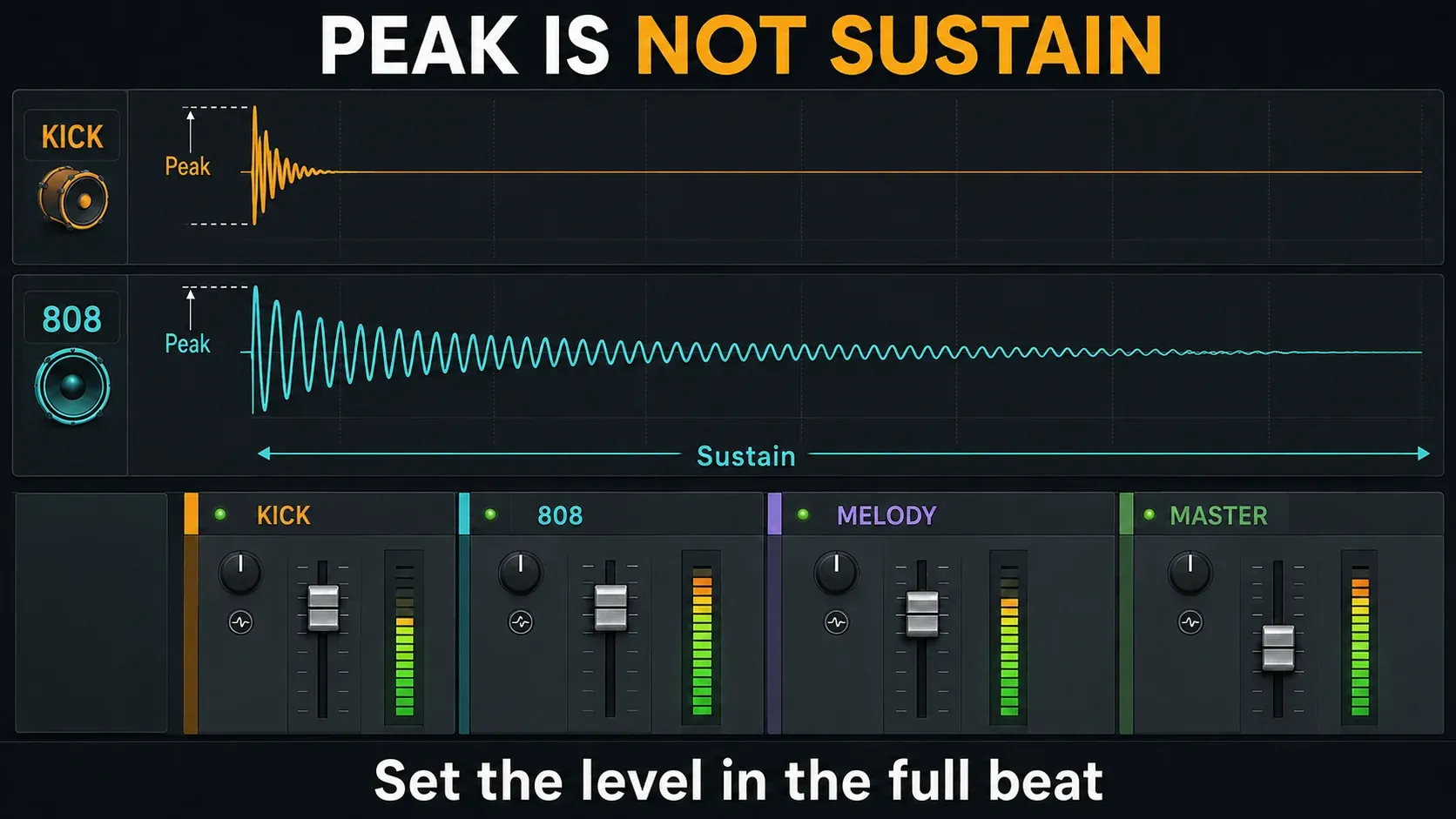
Pull the 808 down, loop a busy section and raise it until the bass phrase is easy to follow. Keep the kick, melody and vocal space in the picture. If a small bass increase buries everything else, try lowering a competing part or shortening its low notes instead.
There is no compulsory 808 peak of −6 dB, and no universal rule that it must sit a fixed number of decibels below the kick. A short attack and a long bass body can reach similar peak levels while feeling very different. Image-Line's explanation of peaks, loudness and clipping is useful here: a peak meter is not a complete balance judgment.
Leave room for the combined signal. An internal floating-point insert reading above 0 dB is not automatically a clipped file, but a saturating plugin can still distort, and the final output or fixed-bit-depth render can clip. Do not use that internal headroom as an excuse to ignore the Master. Save whole-track loudness decisions for mastering the finished mix.
Give the kick and 808 different jobs
Try describing the relationship in one sentence: “The kick supplies the front edge; the 808 carries pitch and sustain.” That gives you something to preserve when an effect changes the sound. Another valid choice is an attack-heavy 808 with the extra kick reserved for selected accents.
A shorter kick can leave more time for a long 808 tail. That does not mean every short kick sits above every bass note in frequency, or that long kicks are forbidden. Audition the pair across the real phrase. A combination that works on the lowest note may behave differently when the bass moves up.
Turn the monitoring down for another comparison. Can you still recognize the kick rhythm and the bass line separately? If not, identify which cue has gone missing. “Needs more punch” might mean a buried kick attack, an overly long bass tail or too little audible bass tone—not the same fix each time.
Compare timing and polarity without breaking the groove
Loop a collision you can hear. First try a shorter unnecessary tail or a small change to the kick placement. Keep the original available and undo the change if the groove gets worse. There is no offset that aligns every kick with every pitched 808.
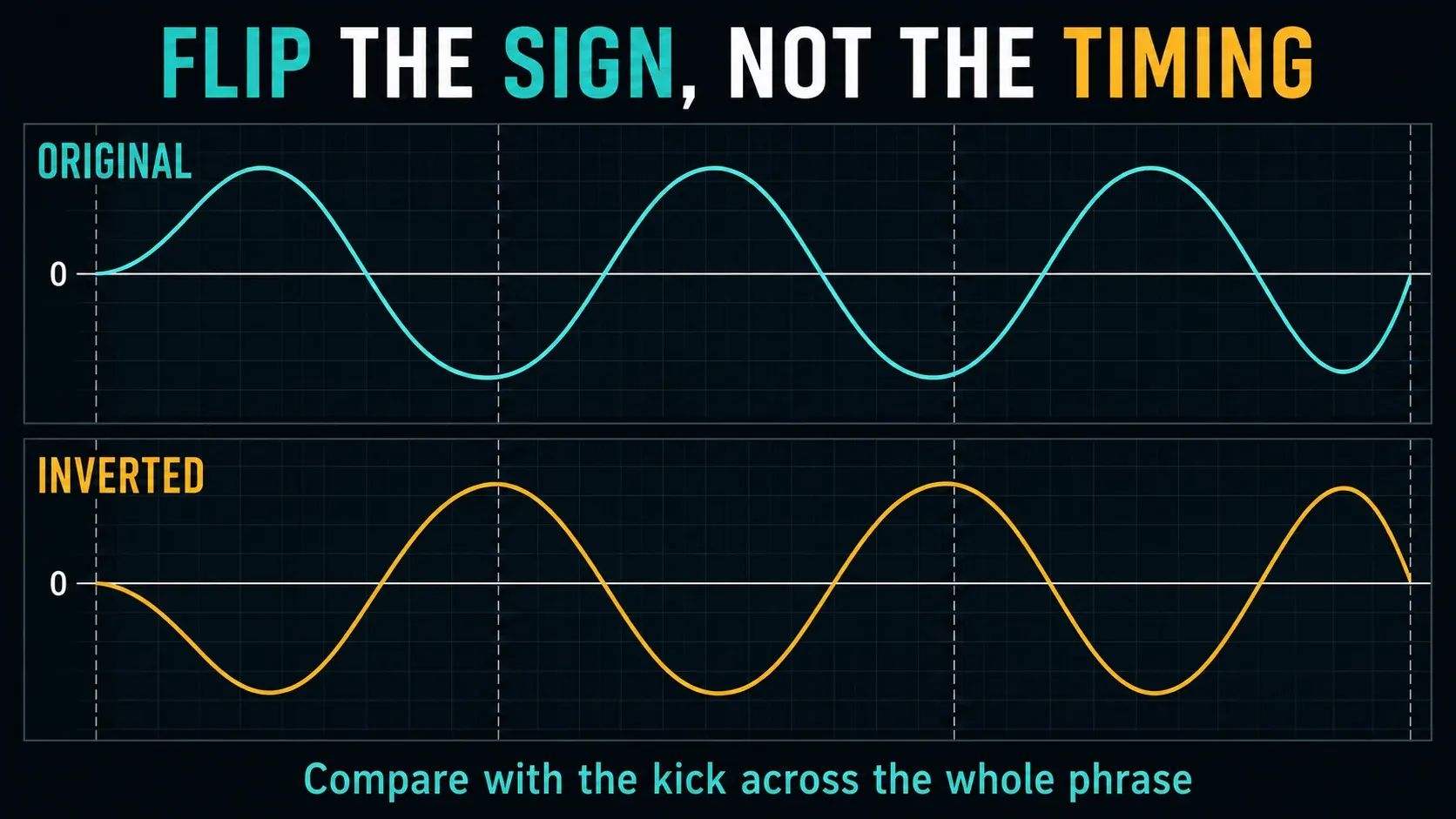
The Mixer control named Invert phase flips waveform polarity: positive values become negative and vice versa. It does not move the note or repair every possible phase relationship. Toggle it on the 808 insert while the kick plays, then compare several bass notes and sections. Listen for a more useful combined attack and body, not a visually prettier wave.
Polarity can change the combined level even though the solo 808's level stays the same. Compare the pairing at similar perceived playback loudness, then recheck the individual balance. If neither position gives a repeatable benefit, keep the original. Do not reverse one stereo channel by mistake; that is a different operation.
EQ the problem, not a frequency chart
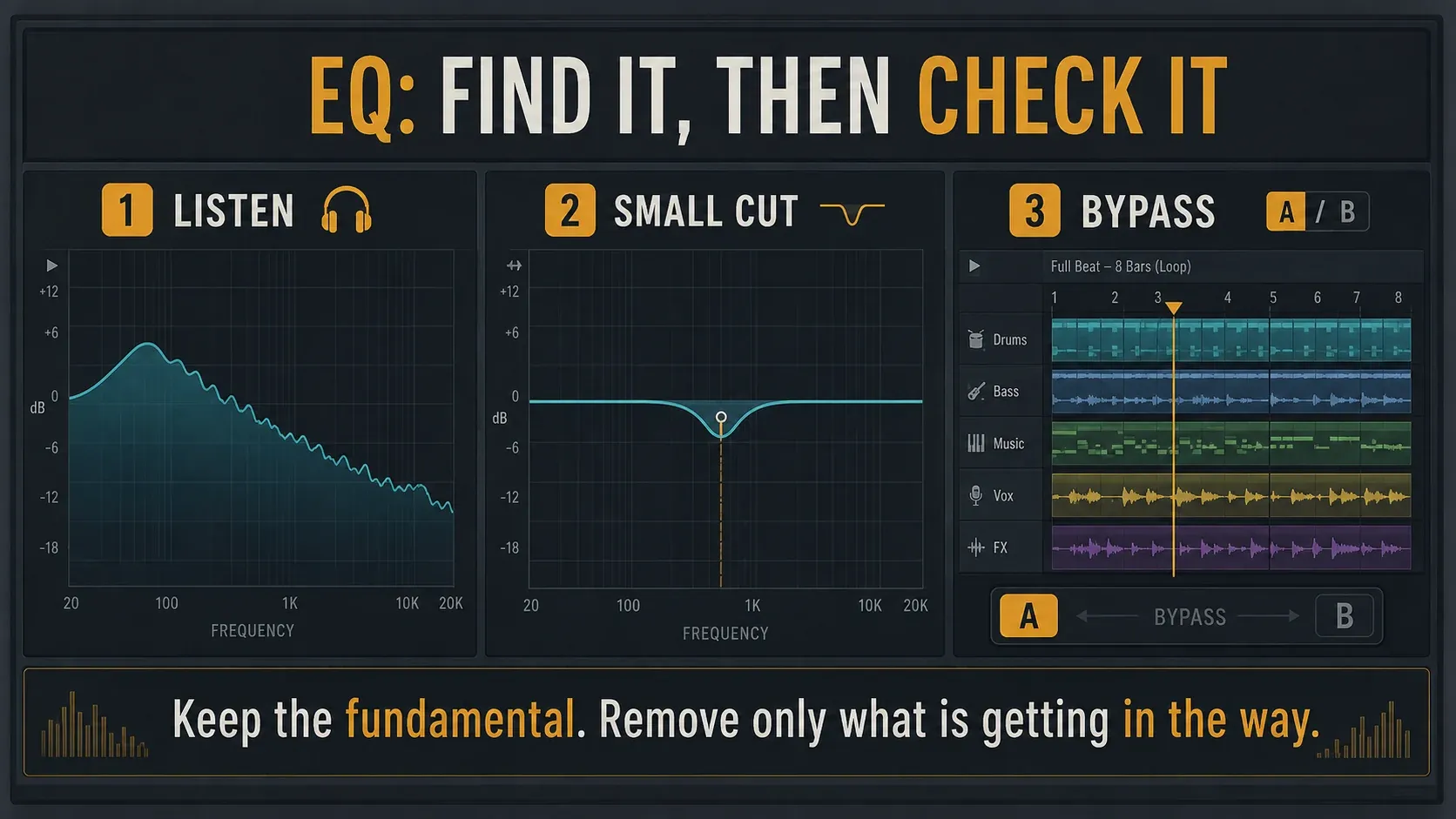
Use Fruity Parametric EQ 2 on the part that needs correction. Start with a flat response. Identify the unwanted ring, excessive weight or masking before choosing a filter. If you cannot hear a problem, the spectrum is not a reason to invent one.
For a focused listening check, enable Band solo on shift and hold Shift while selecting a band token. The Parametric EQ 2 manual explains the audition modes. Release the solo, make a small cut and compare in the full beat. A dramatic narrow boost can make almost any region sound unpleasant; it is not proof that the region needed removing.
A high-pass or low shelf may help unwanted low energy, but audition your lowest actual bass note before keeping it. Cutting below an internet-prescribed frequency can also remove useful weight. For kick overlap, try reducing only the energy that masks the part you want to hear. Avoid deep permanent holes that make the 808 thin when the kick stops.
EQ can also change how layered signals combine, so recheck the kick after a significant adjustment. You do not need to select linear phase automatically. Use the complete Parametric EQ 2 walkthrough when you need filter-mode detail rather than another bass preset.
Add harmonics only when they help
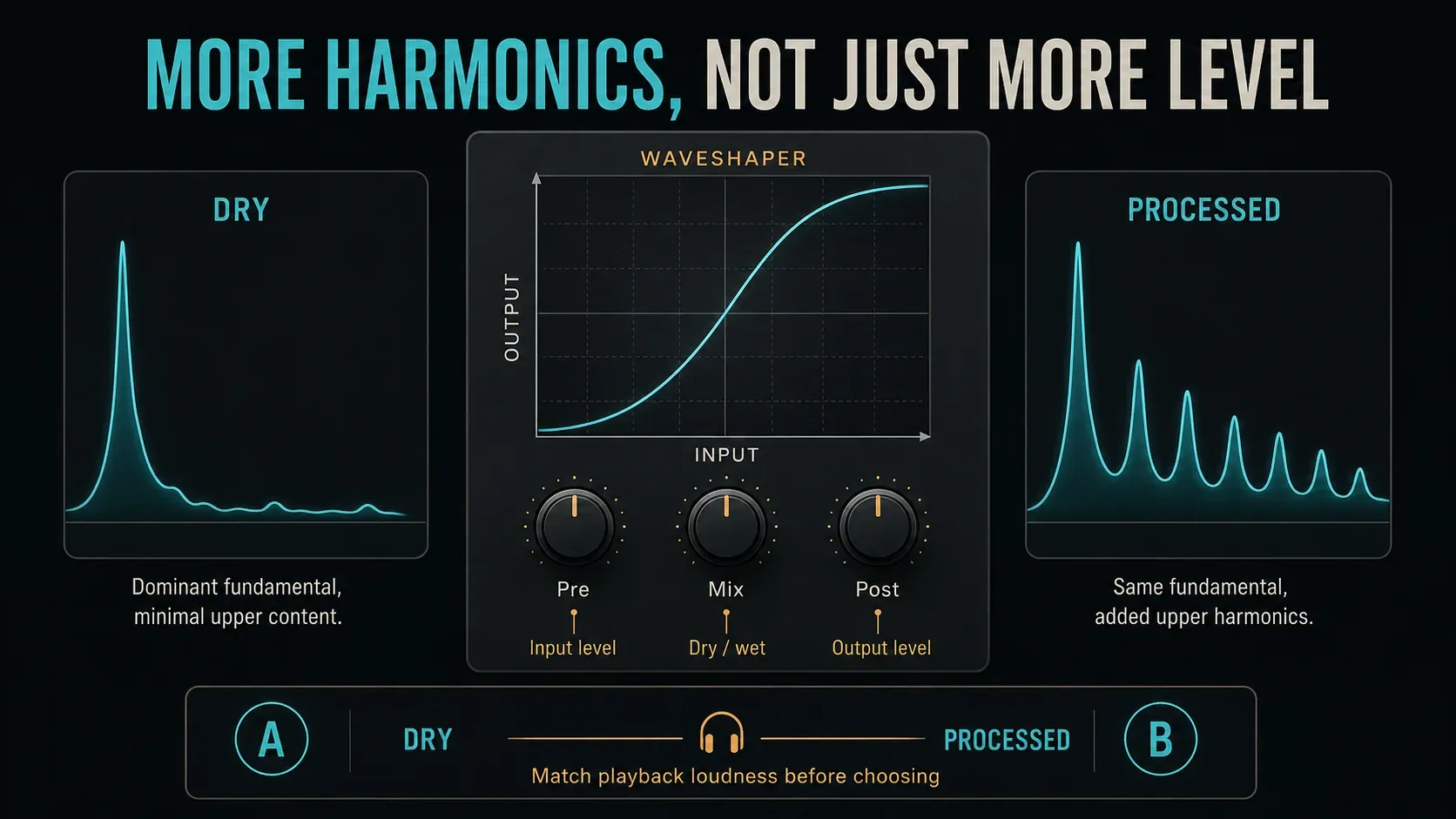
If the 808 has plenty of weight on full-range playback but disappears on a phone speaker, more sub gain may only make the larger system boomier. The phone may not reproduce that fundamental well. A little saturation can add upper harmonics that make the phrase easier to recognize; it cannot make every speaker reproduce deep bass. iZotope's 808 mixing demonstration illustrates this harmonic approach.
In Fruity WaveShaper, shape the input-to-output curve gently and compare a low wet mix. Pre changes input level, Mix blends dry and processed audio, and Post changes output level. Reduce Post as needed so bypass does not lose simply because it is quieter. Those names and functions are documented in the WaveShaper control reference.
Compare in both directions: is the bass phrase clearer on the small speaker, and is it still controlled on headphones or monitors? If distortion turns the bass into a low-mid blur, back off the curve, Pre or wet mix. A source with suitable harmonics may need no extra saturation.
You can place Wave Candy after the effect to inspect its spectrum, waveform or meter. It also has a vectorscope for stereo information. These are diagnostic views, not evidence that “more harmonics” automatically means a better mix.
Soft Clipper is optional
Try Fruity Soft Clipper if you want to round an 808's peaks or add deliberate color. Its THRES sets where compression starts and POST adjusts the level afterward. Above the threshold it can add saturation; Image-Line points toward Fruity Limiter when more transparent clip protection is the aim.
Start gently, match the apparent output level to bypass and listen to the attack and tail. Leave it off if the result is flatter or less intelligible. A deliberate distorted bass tone is a creative choice; an overloaded Master that makes the whole beat crackle is another problem. Adding more compression to an already dense sample can make it worse.
Sidechain only the overlap that needs space
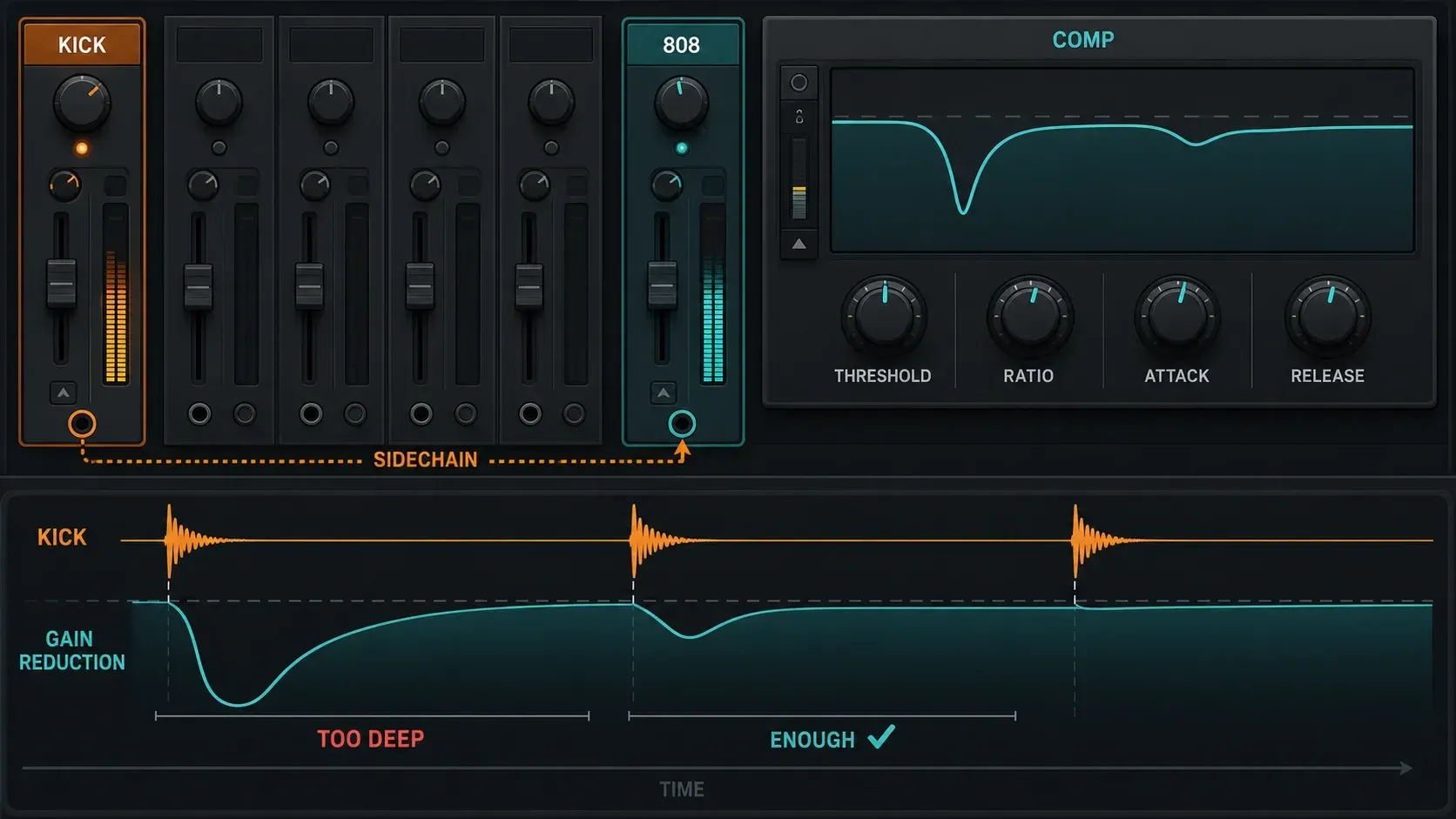
If the kick still disappears on shared hits, let it trigger a compressor on the 808. Keep both instruments on their separate inserts, then:
- Select KICK. Right-click the send switch beneath the 808 insert and choose Sidechain to this track. Avoid the “only” variant here: it removes the source's Master send.
- Load Fruity Limiter on 808. In COMP, right-click SIDECHAIN and select KICK. Do not assume its number will always be 1.
- Lower THRESH and increase RATIO until the shared hits get enough space. Adjust COMP attack and release against the actual rhythm. Too-fast release can distort; too-slow recovery can leave an unwanted gap.
COMP is a control view, not a limiter-bypass button. For compressor-only use, Image-Line specifies maximum CEIL and minimum ATT in LIMIT. Keep gain sensible; the limiter stage is not physically removed. See the Fruity Limiter signal flow and sidechain instructions.
If KICK is absent from the selector, check routing direction. If the kick becomes audible through the 808 insert, check that the send level is zero: a sidechain-only signal should control the effect without an extra audible kick route. If ducking vanishes after a kick-fader change, remember that the normal Mixer send is post-fader.
Fruity Limiter ducks the whole 808 signal. If you specifically need frequency-selective movement or volume automation, continue with the other FL Studio sidechain methods. Do not keep increasing ducking because a preset promises a cleaner mix.
Check mono and small speakers
On a standard Mixer insert, Stereo separation sums toward mono when turned right; fully clockwise is mono. The center is the normal unchanged position. Compare on the Master for a whole-mix check, then restore the original setting. A truly mono signal with no stereo processing has no left/right difference for this control to change.
If the bass becomes hollow in mono, bypass its widening or stereo effects one at a time at a safe monitor level. Do not assume turning the knob farther fixes cancellation that already occurred when the channels were summed. Keep the fundamental steady; intentional width in the upper harmonics is a choice to test, not an automatic failure. The mono compatibility guide develops that diagnosis.
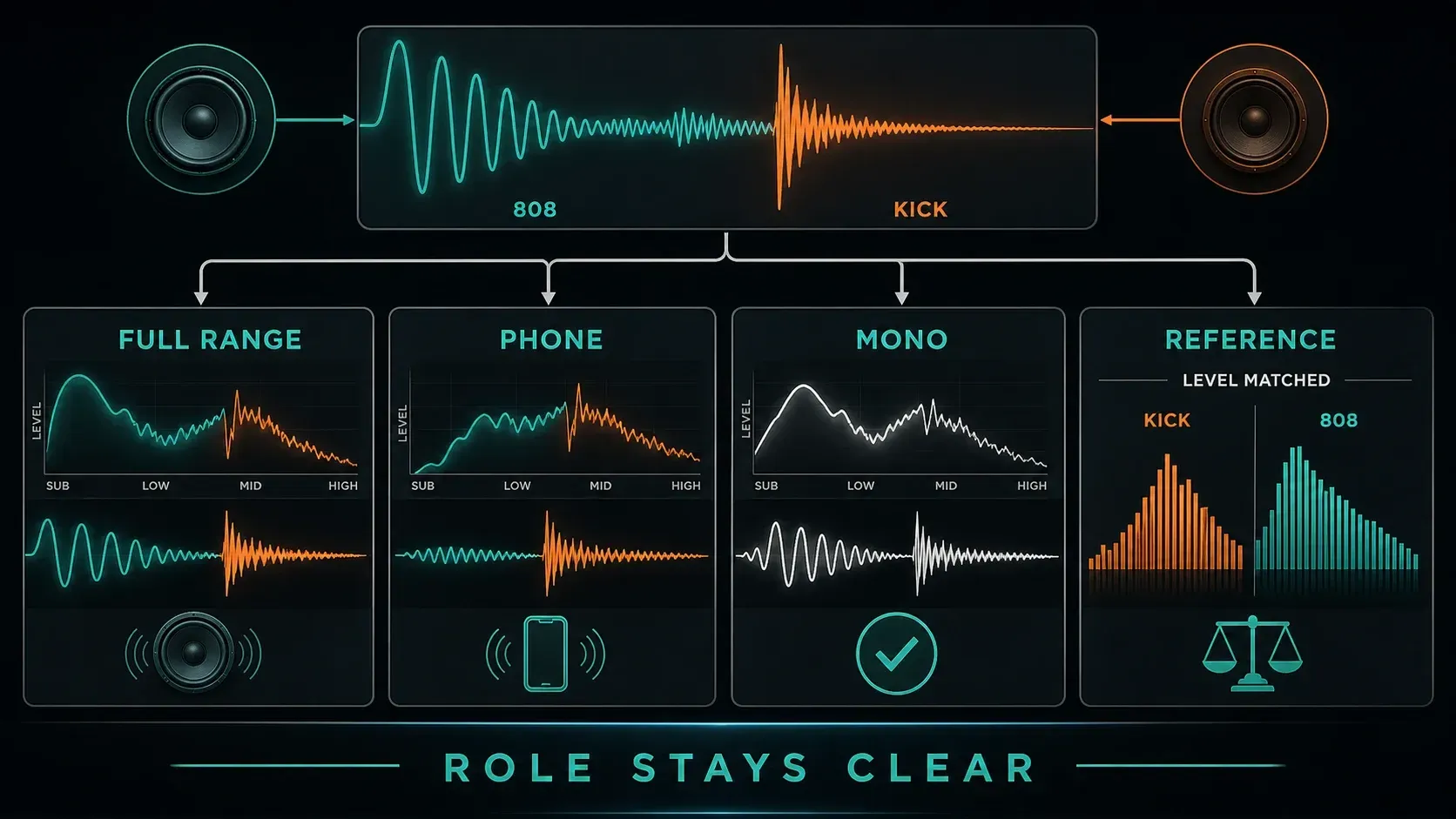
Listen on your normal monitoring, a small speaker or phone, and in mono. Add another familiar system when available. These checks should reveal repeatable problems, not demand identical bass from a phone and a subwoofer. If only the phone lacks the deepest weight but the phrase is readable, do not destroy the full-range balance chasing bass the device cannot play.
Use a reference with similar arrangement density at comparable perceived playback level. Compare the kick's front edge, the bass tail and room for the melody. Keep reference playback free of processing intended only for your own mix. Then listen through a transition, not just the loudest loop. The full beatmaking workflow helps place this check before final loudness and export decisions.
Quick fixes for an 808 that will not sit
- Loud but muddy: check overlapping tails, competing low notes and excessive distortion before adding another EQ.
- Kick disappears: audition the source pairing and timing; compare polarity, then restrained ducking if needed.
- Quiet on a phone, boomy elsewhere: test harmonics at matched playback level instead of another sub boost.
- Distorts even after lowering the fader: inspect gain before the effect and distortion already present in the sample.
- Sidechain pumps or clicks: reduce the amount and rework attack/release against the bass phrase.
- One note is much louder: compare the source envelope, velocity and monitoring response before compressing every note.
- Mono loses the bass: trace stereo processing; do not mistake width reduction for a universal repair.
The final test is musical: can you follow the bass line, hear the intended kick accents and still understand the rest of the beat? Save a new version when those relationships work. You do not owe the 808 another plugin.
FL Studio 808 mixing FAQ
What effects should I put on an 808 in FL Studio?
Start with source choice, note endings and level. Add corrective EQ, saturation, peak shaping or sidechain only for a problem you can hear. An already processed sample may need no extra effects.
What EQ settings should I use for an 808?
There is no universal frequency preset. Locate unwanted energy or masking in the actual phrase, try a small cut and compare with bypass. Check your lowest note before keeping a high-pass filter.
How loud should my 808 be?
Loud enough to carry its role without burying the kick, melody or vocal space. Do not chase a fixed peak or a fixed decibel gap below the kick. Check the combined output and compare processed versions at similar playback loudness.
Should I sidechain the kick to the 808?
Only if their overlapping hits need more separation. The kick controls a compressor on the 808; it is the bass that ducks. Use Sidechain to this track and keep the kick's audible Master route.
Should an 808 be mono?
Keep the low end steady and test the full mix in mono. Stereo upper harmonics can work if they survive summing. In the Mixer, fully clockwise Stereo separation is mono; restore the original setting after comparing.
Why is my 808 loud but muddy?
Overlapping tails, a competing kick or melody, excessive distortion and too much low energy can all blur the bass. Listen to those relationships before boosting more sub or adding compression.
Why can I not hear the 808 on my phone?
The speaker may not reproduce its deepest fundamental well. Gentle saturation can add audible harmonics, but check that the full-range mix still works. More sub gain alone may make larger speakers boomier without helping the phone.
Should I put Soft Clipper on every 808?
No. Keep it only when deliberate peak rounding or color improves the part at a matched playback level. It is not a fix for wrong notes, unwanted overlap or an unbalanced Master.