FL Studio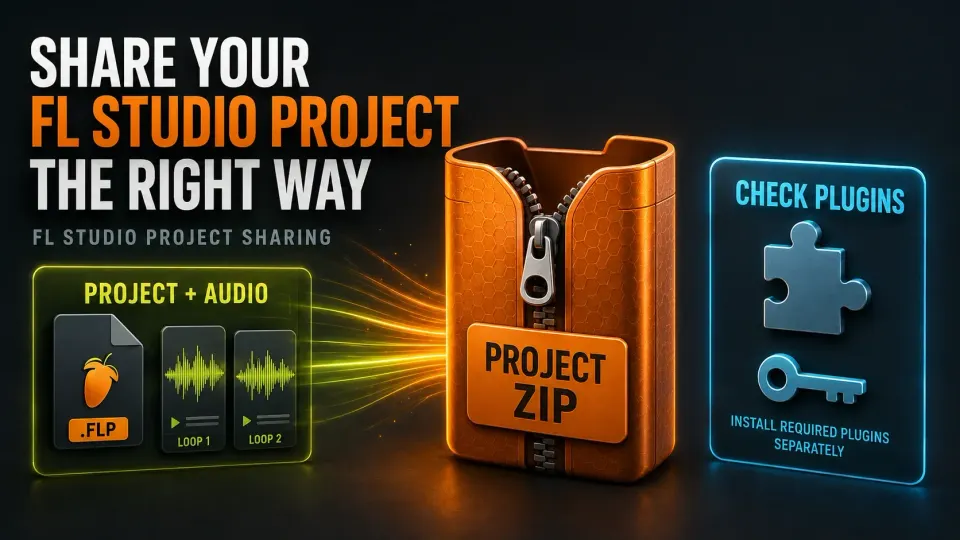
A collaborator opens your FLP, but the vocal is missing and the lead instrument is silent. Those are two different problems: an audio file did not arrive, and a plugin or its library may not be available. A ZIP can help with the first without solving the second.
To create an FL Studio Zipped Loop Package, use File > Export > Zipped loop package. The native package combines the FLP with samples used by Sampler Channels and Audio Clips. The recipient can open that ZIP directly in FL Studio. Check plugins, licenses and externally managed sampler data separately; packaging is not a guarantee that another computer will reproduce the session.
Using the standard time-unlimited Trial? You can save projects and export audio, but cannot reopen saved projects until purchase and unlock. The purchased edition must also cover the features and plugins you need. Keep needed work open until your exports are finished; do not close it just to perform a reopening test. Image-Line explains these limits in its Trial guidance.
Choose a project package or an audio delivery
Ask what the recipient needs to change. Someone editing notes and automation needs different files from someone mixing recorded parts in another DAW.
| Recipient's task | Useful delivery | What still needs checking |
|---|---|---|
| Edit the FL Studio session | Zipped Loop Package or a complete collected project folder | FL Studio version, edition, plugins and external data |
| Mix without your instruments | Aligned audio stems and a reference mix | Included effects, routing, timing and delivery specification |
| Listen or approve the arrangement | A WAV or another agreed listening format | Correct version, complete song and audible tails |
| Keep an editable archive | Project package, separate dependency records and audio fallbacks | Future access to plugins, licenses and required files |
A Zipped Loop Package is not a folder of rendered stems. Follow the stem-export workflow when the recipient needs audio parts, or export the finished song for listening. Project Bones is another different tool: it exports project components such as presets and scores for reuse, rather than replacing a complete session handoff.
Know what a Zipped Loop Package includes
The project-format documentation identifies Sampler Channels and Audio Clips as the sample sources included in the ZIP. That covers ordinary sample-based drum channels and audio clips such as recordings or consolidated parts that the project can still locate.
An FLP stores project data and plugin state, but should not be treated as a copy of every external audio file. There are embedded-audio exceptions: the FLP save reference explicitly includes audio held in Edison. That exception does not make unrelated Audio Clip files or an external sampler library self-contained.
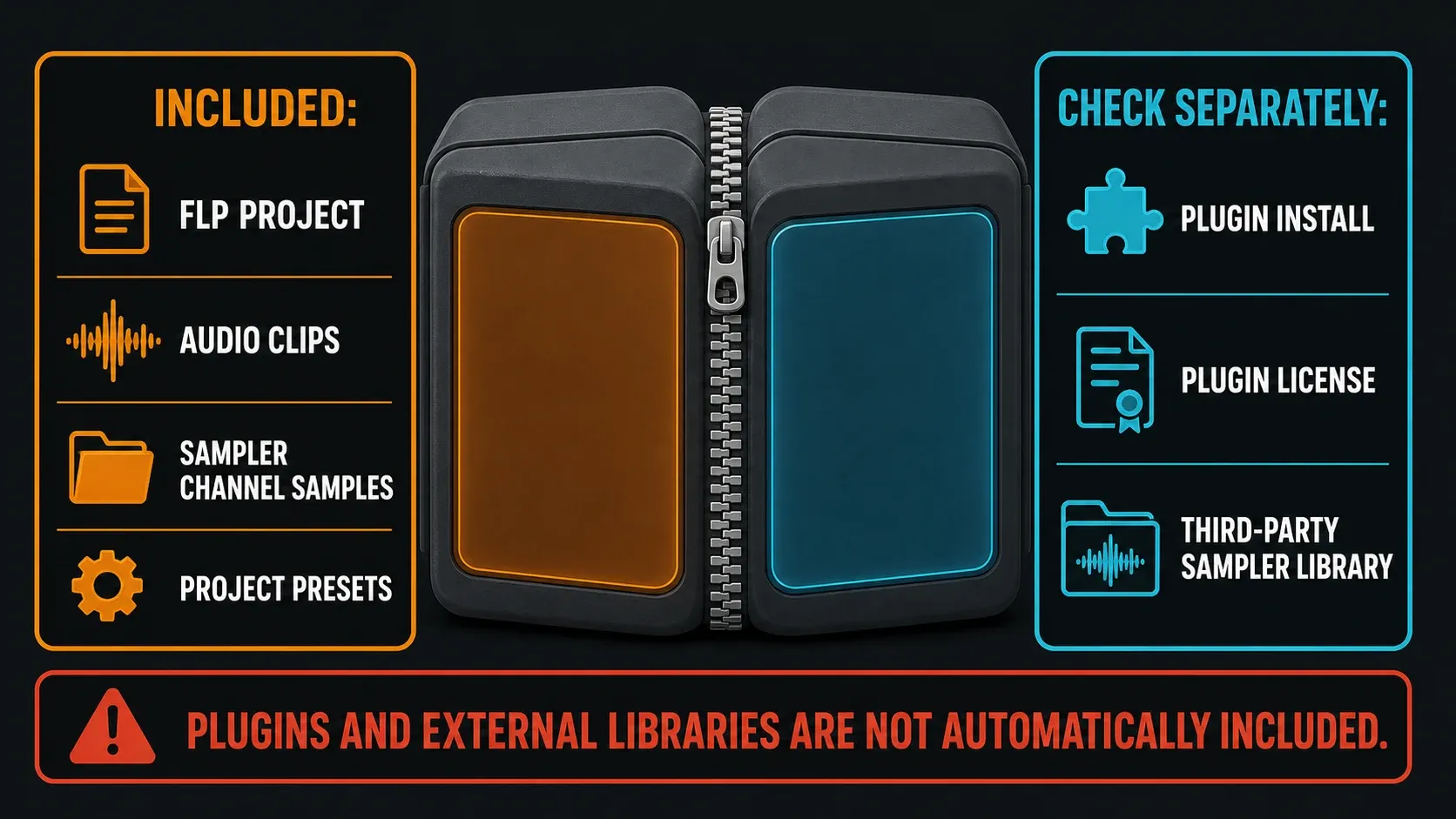
Plugin installation files and licenses do not travel inside the project package. Samples managed by another plugin are also outside the normal collection rule unless that plugin saves the audio in its preset data. Image-Line gives DirectWave's Monolithic mode as an example of this exception. Check the actual instrument and save format; do not assume that every sampler has an equivalent option.
A missing source file cannot be recovered merely by exporting a new ZIP. Resolve the missing data on the sender's computer first, then package the corrected project. Keep a separate copy of important recordings and source files as well as the project file.
Agree on compatibility before sending files
Use these four checks before spending time uploading a large package. The official project-sharing guide covers both transferring to another computer and collaborating with another FL Studio user.
- FL Studio release and edition. Record the version shown in
Help > About. The recipient needs the same or a higher version; a project saved in a newer version cannot be opened in an older one. Avoid making an unreleased beta a requirement without agreeing it first. Check edition features and native-plugin ownership too. - Plugin identity. List the product, format and version. Image-Line recommends identical plugin format and version on both systems. A VST3 installation does not automatically stand in for the VST instance used in the project.
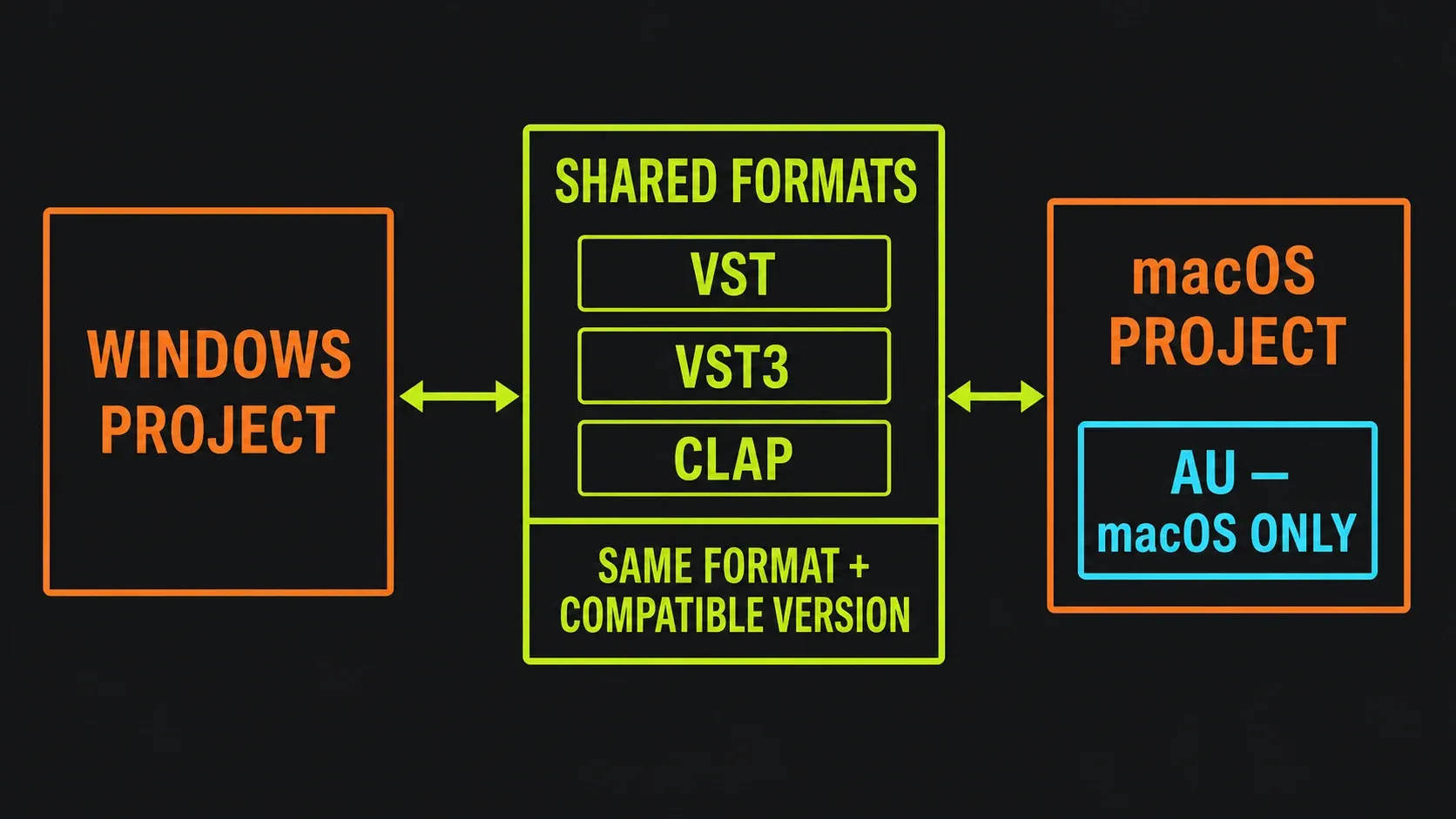
- Operating system and available builds. For Windows/macOS sharing, use matching VST, VST3 or CLAP versions that the vendor provides for each system. AU is not the cross-platform option. Install the appropriate build for the recipient's OS and processor; a copied Windows plugin binary is not a Mac installation.
- Data and permission to share. Identify any external sampler files and whether the recipient has the necessary content and licenses. Send only material you are entitled to distribute. When a dependency cannot be supplied, agree on a rendered audio substitute.
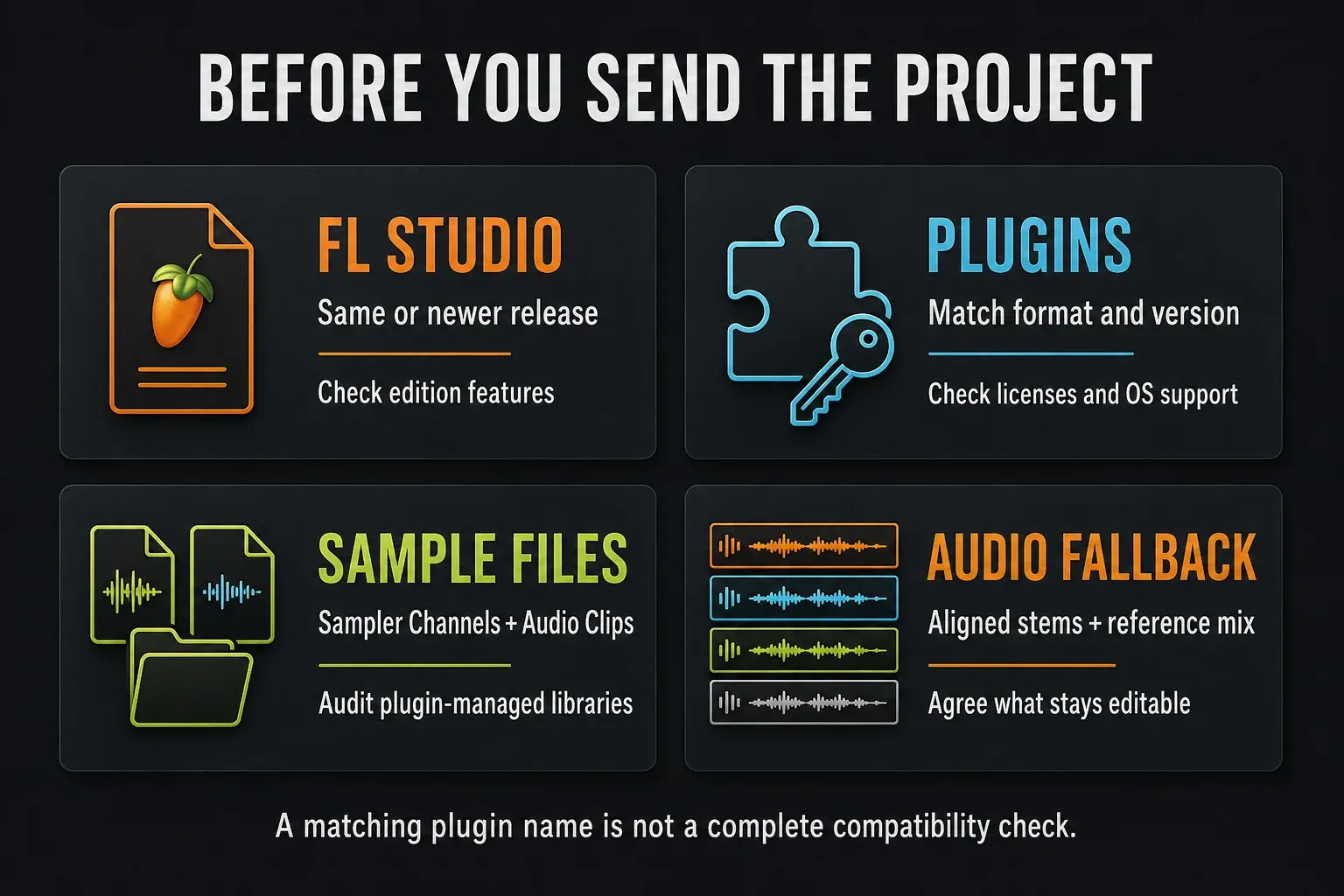
For plugin recognition, scan with Verify plugins enabled in Plugin Manager. This helps FL Studio identify installed plugins; it does not install missing software or grant a license. The plugin installation guide covers setup and discovery. Choosing an available stock instrument or effect can simplify a collaboration, but still check that the recipient owns it. A free plugin also needs the correct installation and format.
Prepare the handoff without disturbing the original
Save a clearly named project version before making collaboration-specific edits. For example, Harbor_handoff_v03.flp distinguishes it from your working mix. File > Save new version creates a new project filename; it does not duplicate every recording or library file referenced by that project. The distinction is documented in the File menu reference.
Keep original assets in place. Do not rename, move or delete shared sample folders to make a test harder. If you need an independent handoff folder, copy the required data into it and retain the originals. Changing a project filename alone is not an independent asset backup.
Name important Channels, Playlist parts and Mixer tracks so the recipient can follow the arrangement. Leave a short note for each substituted instrument: which source it replaces, where its audio starts, and whether effects are printed. The Mixer routing guide helps when deciding what a rendered fallback should contain.
Export a reference mix of this exact version. It gives the recipient something to compare for missing parts, balance and arrangement; it is not a checksum or proof that the transferred project is identical. Agree on the listening format using the export-settings guide. If you include a mastered reference, say so: it may sound different from an editable project without that final processing.
Create and send a Zipped Loop Package in nine steps
- Save a named handoff version. Preserve the working project and its source audio. In standard Trial, finish needed exports before closing the session.
- Resolve missing files on the sender's system. Check load warnings and confirm that the intended recordings and samples play before packaging.
- Check plugin and library dependencies. Record the required FL Studio edition/version, plugin formats/versions and external data. Render agreed fallbacks for unavailable parts.
- Export the reference mix. Use this same project version and label any final processing that is not included in the editable delivery.
- Choose the native ZIP export. Select
File > Export > Zipped loop packagein FL Studio. - Save a distinct archive. Give the ZIP a clear versioned name and avoid overwriting the original handoff package.
- Check the exported package. On a licensed installation, open the ZIP directly and check warnings and playback. In standard Trial, postpone this reopening test until purchase/unlock. A same-computer check is useful but can still find original source files.
- Send the package and handoff notes. Include the reference, compatibility list and any separately supplied data or audio fallbacks that the recipient is allowed to receive.
- Verify and preserve the receiving copy. On a compatible licensed installation, check dependencies and audition against the reference. Keep the received archive, then export a separately named working ZIP or collect a complete working project folder before relying on a standalone FLP.
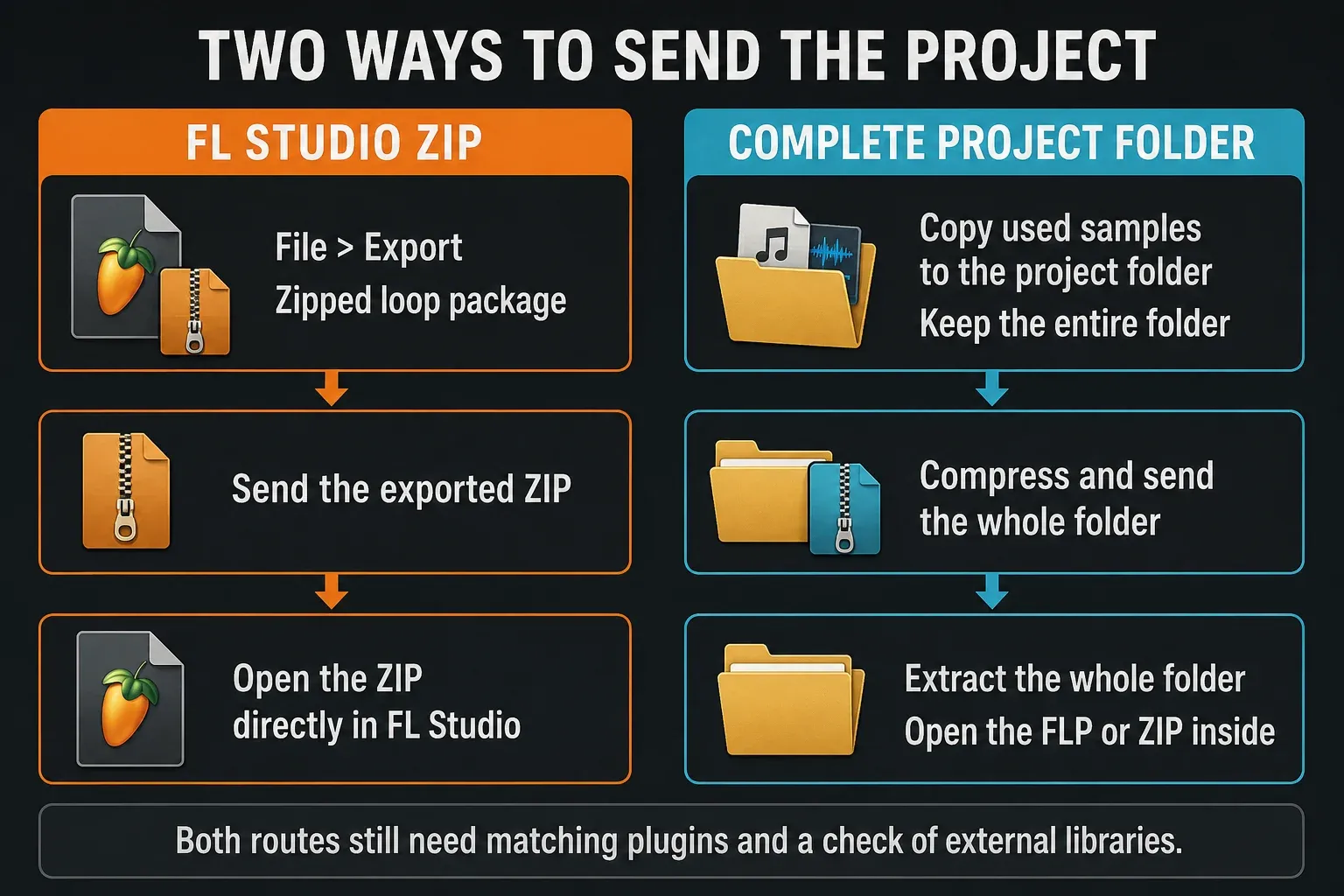
For a native Zipped Loop Package, use File > Open and select the ZIP itself. Opening an archive preview in the operating system is not the same as loading the project in FL Studio. A second valid delivery route is a manually zipped complete project folder; that route requires extraction, as explained below.
Handle external sampler data and audio fallbacks
Open each sample-based instrument and identify where its sounds come from. A Kontakt instrument, for example, can depend on files that FL Studio's own Sampler/Audio Clip collection does not manage; Kontakt's sample-saving documentation explains its file-reference choices. Follow the relevant instrument's documented save or relocation method rather than copying an arbitrary folder and hoping the preset will find it.
If the plugin supports an embedded or portable save format, verify which files that format actually contains. Otherwise supply authorized external assets with clear folder instructions, or have the recipient use their own licensed copy of the same content. A ZIP containing your FLP does not remove those requirements.
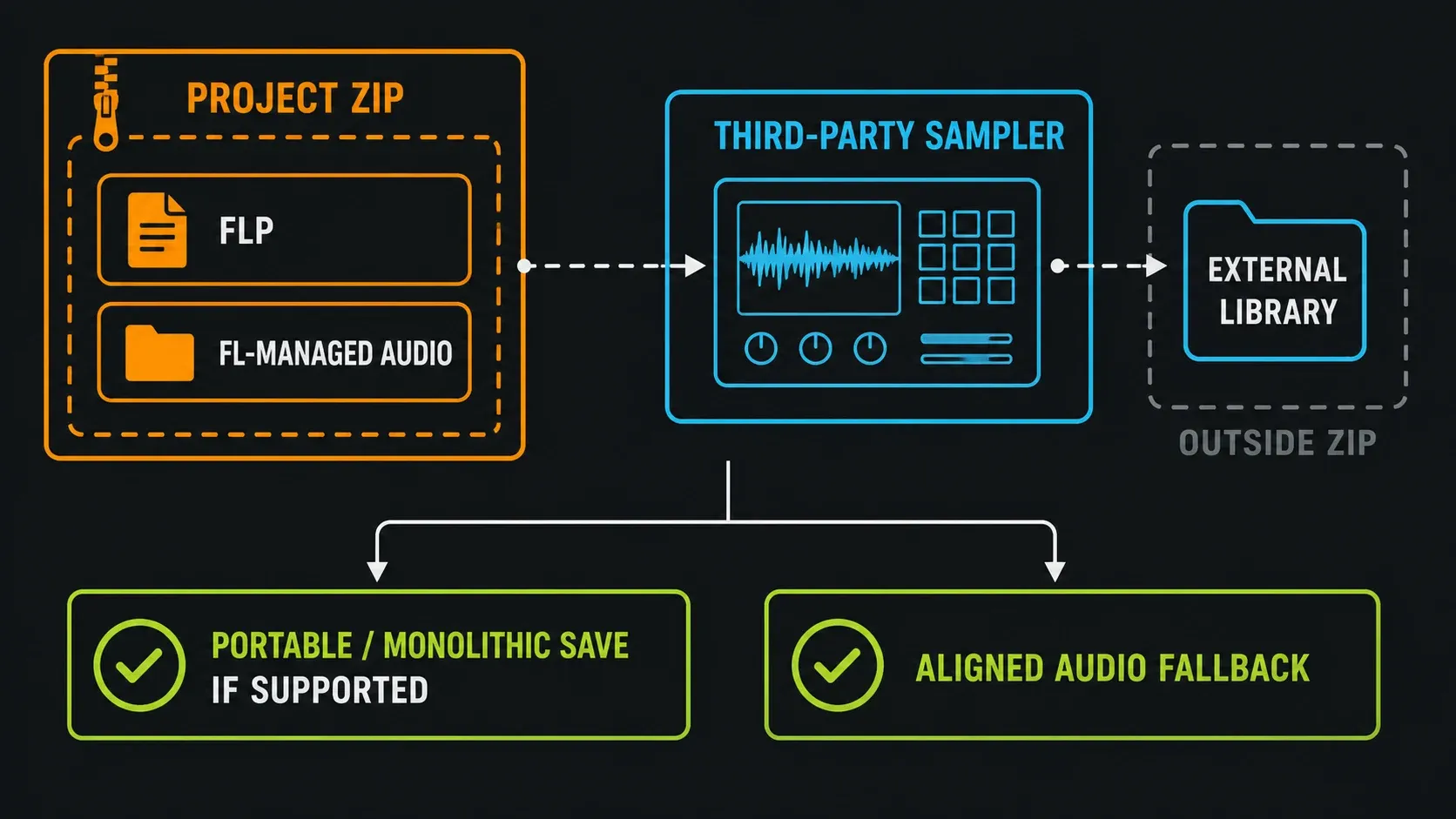
When the recipient cannot run the instrument, render the part to audio from an agreed common start. Keep the editable notes in the original project if you may need changes later. State whether the delivery is dry, processed, or accompanied by a separate effect return; duplicating already printed processing can change the result. Use the stem guide for the routing and alignment decisions rather than treating a project ZIP as an audio render.
Check the project on the recipient's computer
The receiving system is the useful test of portability because it does not normally have the sender's original search folders. Even then, an apparently successful open is not enough: read the warnings and listen. A silent unused section can hide a missing sound until much later.
- Confirm the intended FL Studio version and edition are running. If an older installation opens by default, start the correct version first and use
File > Open. - Read every missing-file, missing-plugin or Trial-plugin warning. Inspect red Channels, empty replacements and silent parts rather than dismissing them.
- Check external sampler content from inside the relevant instrument. A recognized plugin can still be missing its library.
- Audition the intro, a busy section, transitions and the ending. Check important recordings and rendered substitutes, then compare with the reference at a sensible listening level.
- Retain the received archive. For continued work, export a separately named Zipped Loop Package or create a complete collected working folder with
Copy used samples to the project folder. Saving a new standalone FLP does not automatically embed its external audio. Do not delete original assets or discard the delivery to test this.
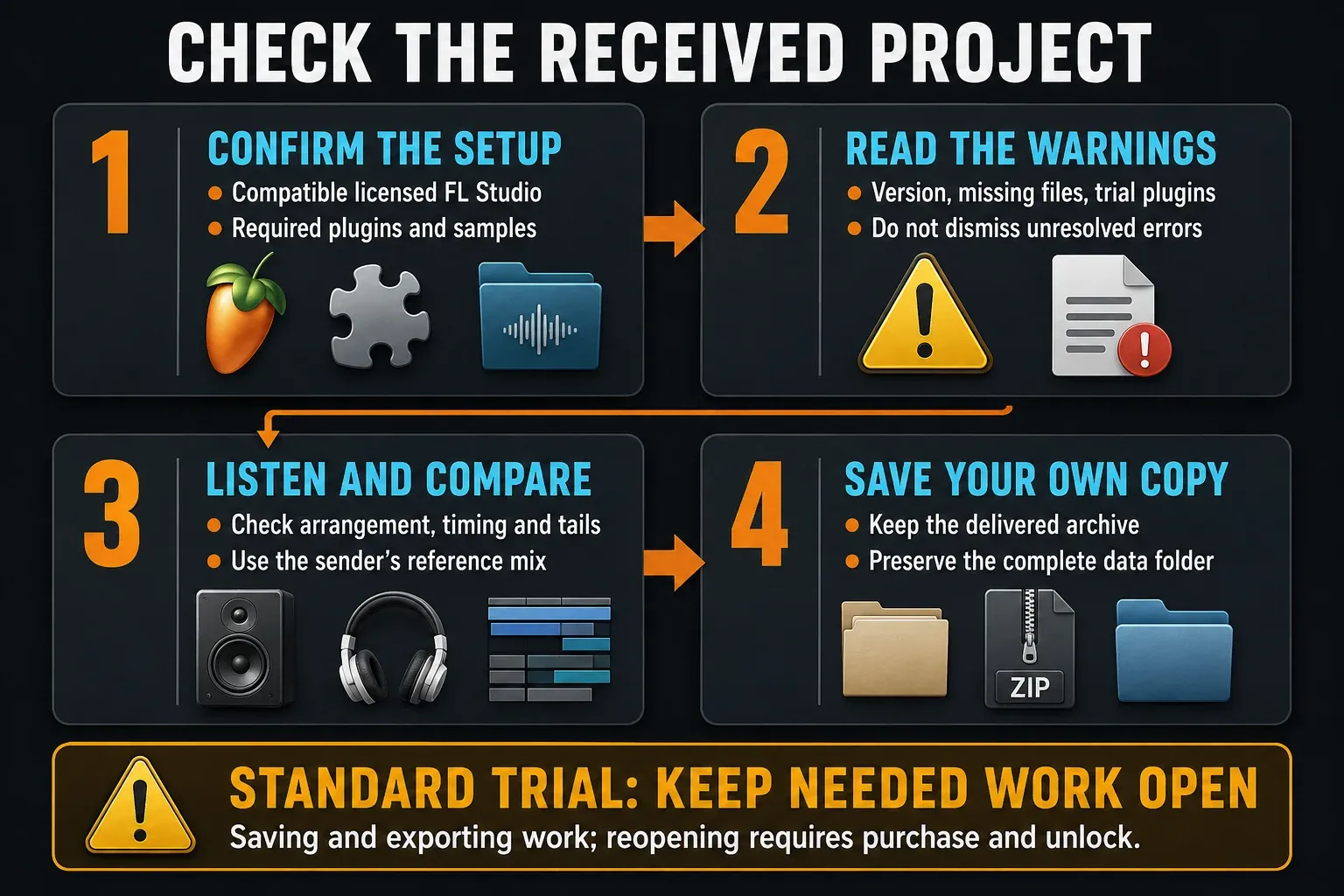
If the recipient is still using the standard Trial, agree on audio delivery or wait for purchase/unlock before relying on project reopening. Installing FL Studio alone does not remove its Trial restrictions; the installation guide covers setup, while the license and plugin checks remain part of this handoff.
Alternative: collect and zip the complete project folder
For ongoing collaboration, a collected folder can be easier to maintain than repeated one-file packages. In Options > Project general settings, inspect the Data folder location. Store relative to the project file keeps the relationship with the project location; if a specified folder is used instead, account for that path when transferring the project.
The Project Settings manual distinguishes newly recorded/generated audio from samples imported from the Browser, which remain in their original locations by default. Enable Copy used samples to the project folder to collect the FL-managed sample dependencies. This does not override the external-sampler limitations above.
Where File management offers Copy, Move and Don't move or copy for audio created in the project, choose the behavior deliberately. Use copying when your handoff must leave the existing source files in place. Check the actual folder contents and required external data before archiving the whole project folder.
Image-Line's sharing guide explicitly supports manually zipping that complete folder. The recipient extracts the whole folder, keeps its structure intact and opens the FLP or native project ZIP inside it. Do not send only the FLP from the folder and assume the adjacent Audio, Renders or other required files will follow.
Fix missing samples, plugins and ZIP errors by cause
| Symptom | Check first | Useful next action |
|---|---|---|
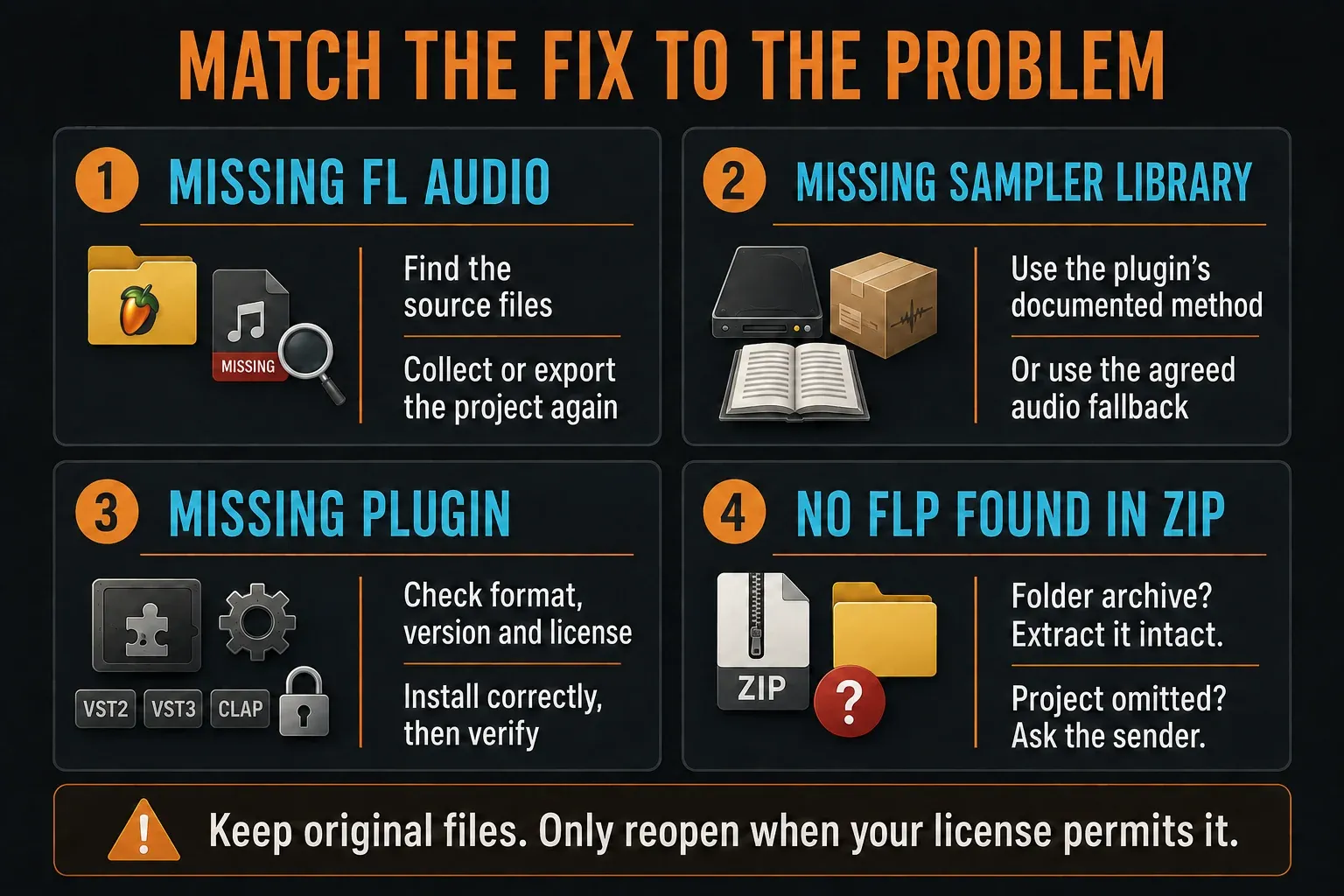
| Missing FL-managed audio | Was the source available when the sender packaged the project? | Locate the required files, correct the project and export or collect it again |
| Plugin loads but its instrument is silent | External sampler library, preset data and authorization | Restore the plugin's required content using its own documented method, or use the agreed audio fallback |
| Missing plugin or placeholder | Exact plugin format/version, installation, license and Trial status | Install the correct build and verify recognition; do not substitute a different format blindly |
| No FLP found in ZIP | Is it a sample pack, a complete-folder archive, or an incomplete project delivery? | Extract the appropriate folder archive, or ask the sender for the missing project/native package |
The missing-files troubleshooting page explains red Channels and empty plugin replacements. Point Browser search folders at the actual audio locations. Avoid leaving an entire drive as a permanent search folder: broad searches can make project loading slow. For plugin discovery, the manual recommends Verify plugins with Rescan previously verified plugins and Rescan plugins with errors; none of these settings can supply an absent license or sample library.
If the warning concerns the project data folder, inspect its saved path before changing anything. Image-Line's data-folder troubleshooting guide separates locating the real folder from resetting its association. Resetting the association does not recover missing audio. Preserve the source data, and apply any close/reopen step only when the Trial limitation no longer prevents reopening.
“Could not find any FLP project in this zipped archive” means FL Studio did not find a project in the ZIP. A sample-only pack is not a broken FLP: extract its audio to a normal folder and import the samples. For a manually zipped complete project folder, extract the complete folder and open the contained project. If the sender intended a native project package but omitted the FLP, ask them to export it correctly.
Frequently asked questions
Does a Zipped Loop Package include every sample?
It collects samples used by Sampler Channels and Audio Clips. Externally managed sampler data is not included by that rule unless the plugin embeds it in its preset format. Resolve missing sources before export and check external dependencies separately.
Do I need to unzip an FL Studio project package?
A native Zipped Loop Package can be opened directly in FL Studio. A manually zipped complete project folder should be extracted as a whole, then you open the FLP or native project ZIP inside it. Sample-only archives should also be extracted before importing their audio.
Are plugins and licenses included in the ZIP?
No. The project can retain plugin state, but the recipient still needs the appropriate installed plugins, licenses and content. Match the plugin format and version; use rendered audio for parts the recipient cannot run.
Can I reopen the ZIP in the standard Trial?
The standard time-unlimited Trial cannot reopen saved projects until purchase and unlock. Save your work and complete needed audio exports before closing it. The purchased edition and additional plugin licenses must cover what the project uses.
Can a Windows project open on a Mac?
FL Studio projects can move between Windows and macOS, but dependencies still have to match. Use the same or a higher FL Studio version, suitable edition features and identical plugin formats and versions available for both systems. Use VST, VST3 or CLAP for this workflow, not AU.
Does reopening on the sender's computer prove the package is complete?
No. The sender's system may still find original files through its search paths. Check the receiving environment, its warnings and playback against a reference. Do not delete or rename original assets to force a test.
Should I send a project ZIP or stems?
Send the project package when the recipient needs to edit the FL Studio session and can satisfy its dependencies. Send aligned stems when they need audio parts without running your instruments, especially in another DAW. A reference mix helps explain the intended result in either case.
Keep the compatibility note with each handoff version. For the next task, use the Export & Collaboration guides; for keeping project versions and source data organized between deliveries, follow the Workflow guides.